
My first marine aquarium guide - Part three
Buying tips: what to look at in the shop and what to leave in the tank
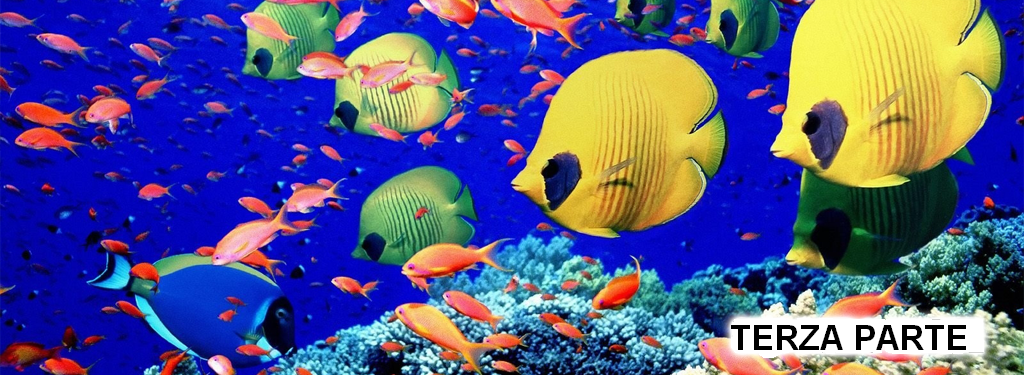
Buying tips: how and what to choose.
Buying a coral, a shrimp or any other invertebrate is something many people sadly underestimate: the beginner usually walks into the shop, has a look in the tanks, spots the animal of their dreams and asks the shopkeeper a couple of questions like "Is it easy to keep? Will it fit in my aquarium? What do I feed it?".
In the vast majority of cases the seller says "Don't worry", while slipping the chosen coral into the bag, and that's the end of it. The result is that the poor aquarist puts an unsuitable animal in the tank or, worse, one that is already unwell.
To avoid all this, here is a series of tips on what and how to buy, depending on the group of animals. These are of course tips for beginners, so to start with let's say which invertebrates you must forget about for now.
Animals not for beginners.
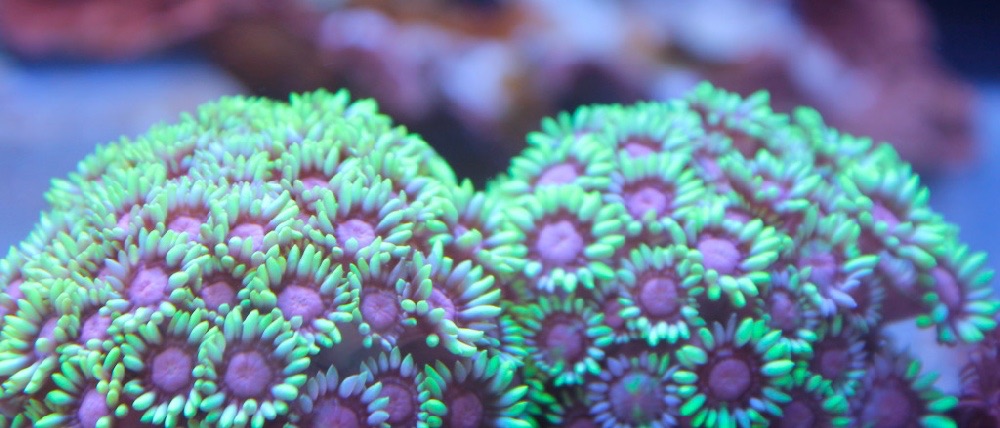
Among the LPS stony corals I strongly advise against all Goniopora: beautiful, but decidedly delicate and short-lived in the tanks of people without experience (sometimes, sadly, even in those of experts).
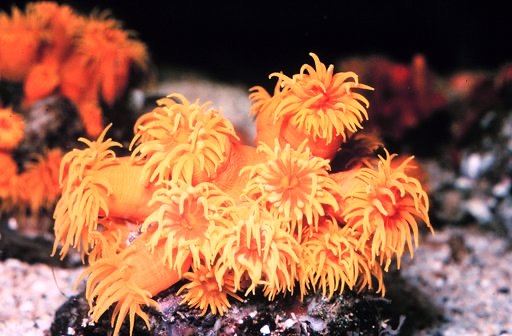
Tubastrea coccinea, whose bright orange colour perhaps makes it the most beautiful LPS: it is a coral that must be placed in shade and fed EVERY DAY, one polyp at a time. So forget it unless you have an hour a day to "spoon-feed" every polyp.
Among the SPS stony corals, for those without a minimum of experience I advise against more or less all Acropora; in general, though, SPS are not very easy animals, especially if your pollutants are high, with nitrates above 3-4 mg per litre.
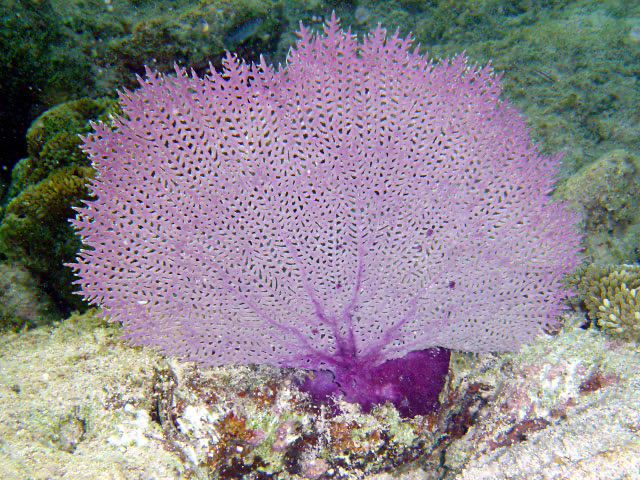
Among the corals without a hard skeleton, avoid red or purple gorgonians and fan gorgonians: as a rule they are for specialists, because they have no zooxanthellae and must be fed constantly. Also avoid the highly branched pink and red soft corals of the genus Dendronephthya: they are not suited to life in an aquarium.
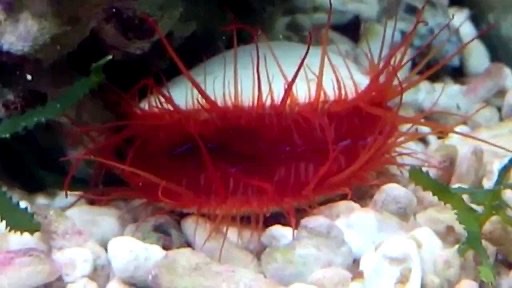
Among the molluscs avoid Lima scabra, a shell like a large clam with a red mollusc with long cilia, because it lives very briefly in an aquarium as it needs a lot of food. Giant clams, on the other hand, can live a long time but are not suited to beginners, so don't be tempted.
Then ALWAYS AND IN ANY CASE avoid starfish of every shape and size, except perhaps the sand-sifting Archaster: in an aquarium they live briefly and badly, there's no point making them suffer. Also keep well away from sea lilies, colourful nudibranchs, sea cucumbers and the many other gadgets shops sometimes push.
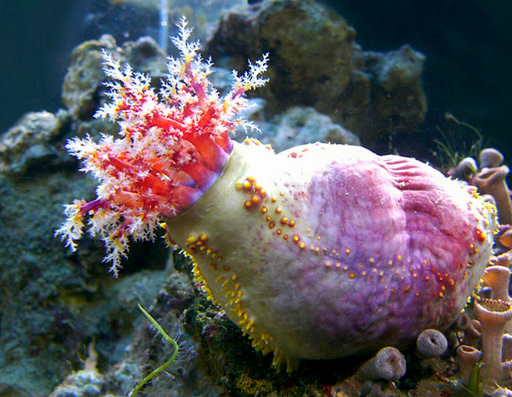
The animals not for beginners
| Group | Animal | Why, according to the author |
|---|---|---|
| LPS | Goniopora | Delicate and short-lived |
| LPS | Tubastrea coccinea | Needs shade and feeding every day, one polyp at a time |
| SPS | Acropora | Almost all, for those without a minimum of experience |
| No hard skeleton | Red, purple and fan gorgonians | No zooxanthellae, must be fed constantly |
| No hard skeleton | Dendronephthya | Not suited to life in an aquarium |
| Molluscs | Lima scabra | Short-lived: needs a lot of food |
| Molluscs | Giant clams | Can live long, but are not for beginners |
| Echinoderms | Starfish | Live briefly and badly, except perhaps sand-sifting Archaster |
| Others | Sea lilies, colourful nudibranchs, sea cucumbers | Better to keep away |
The animal of your dreams can wait: learn first with the hardier ones.
LPS corals.
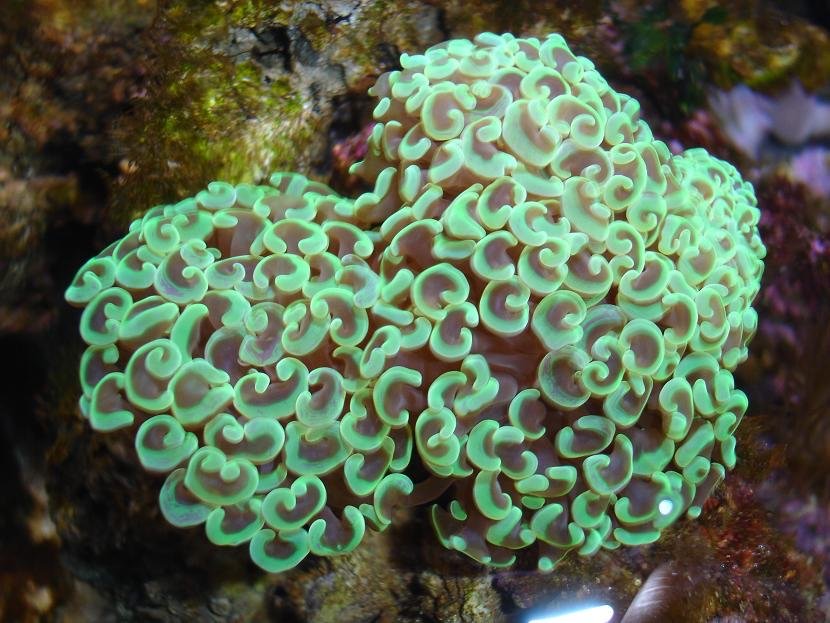
The animal should look nice and inflated, colourful and perfectly settled in the shopkeeper's tank; avoid buying LPS that have just arrived in the shop, which may look merely closed but are actually suffering, and don't listen to the seller if they tell you "it'll certainly recover once it's in the tank".
If the shopkeeper is honest they should, at your request, pick up the rock or plug with the coral and show you the base of the animal: don't buy it if you see white areas of exposed skeleton, where you can see the limestone plates because the tissue has receded: an LPS with receded tissue is a bit like a tooth with no gum left at its base, that is, sick or dying. In this case too, forget it.
An SPS coral that is deflated and has its mouth half open is generally not well either. If it is a variety with many polyps, don't buy it if you see that some polyps have died, leaving only the limestone calice. Finally, when examining the base of the coral (always do this!) watch out for Aiptasia anemones or other pests attached to it, which would inevitably end up in your tank.
How to look at an LPS coral
- 1Nicely inflated, colourful and well settled in the shop tank
- 2Tissue down to the base no white parts visible
- 3Exposed plates tissue has receded: like a tooth with no gum
- 4Hitchhikers on the base Aiptasia or other pests would end up in the tank
- 5The base ask to see it: always do this
If you see exposed skeleton at the base, forget it: it won't recover "once it's in the tank".
SPS corals.
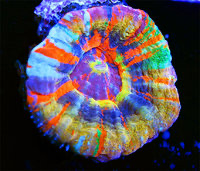
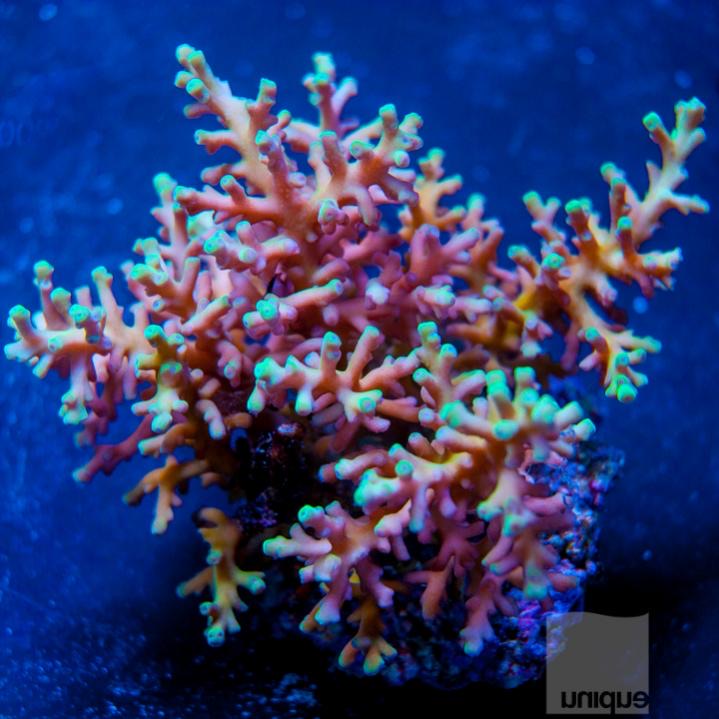
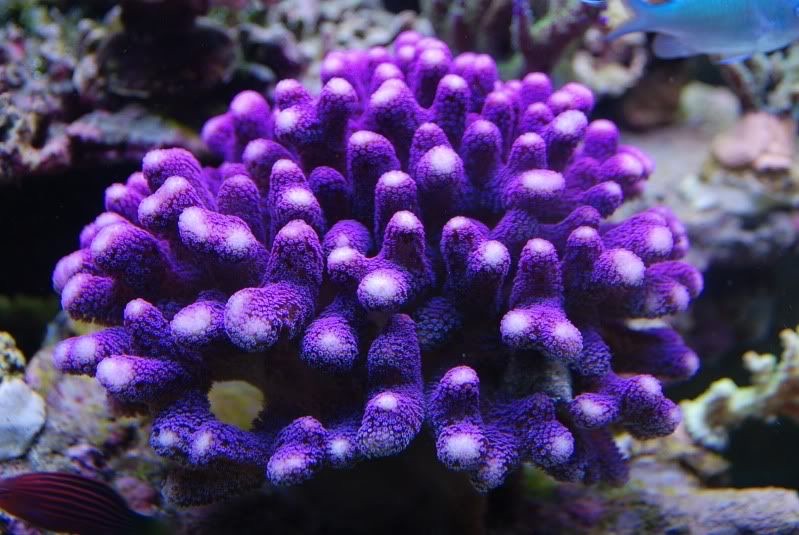
Don't buy frags or whole colonies if you notice white areas at the base or between the branches, and give preference to colonies with plenty of polyp extension and good colour. Here too, examine the base of the corals and be hesitant if you find strange growths or areas with dead polyps. If you see a little white or coloured crab moving among the SPS branches, don't worry: it is a symbiont, take it home too! Before buying, note the type of lighting on the tank where the coral is kept: if it is different from yours, keep the coral on the bottom for the first few days and then, little by little, move it to its place in the rockwork.
What to look at on an SPS coral
- 1Polyps well open colonies with extended polyps and good colour
- 2Dead polyps only the calice is left: be hesitant
- 3White areas between branches or at the base: don't buy
- 4Little crab it's a symbiont: take it home
- 5The base watch for strange growths
Colour, open polyps and no white areas: the little crab, on the other hand, is good news.
Sources: [4]
From the bottom to its place in the rockwork
- 1Your light fixture check if it differs from the shop's
- 2The first few days keep the coral on the bottom
- 3Little by little move it upwards
- 4In its place in the rockwork
If the light is different, no hurry: the coral reaches its place a bit at a time.
Soft corals.
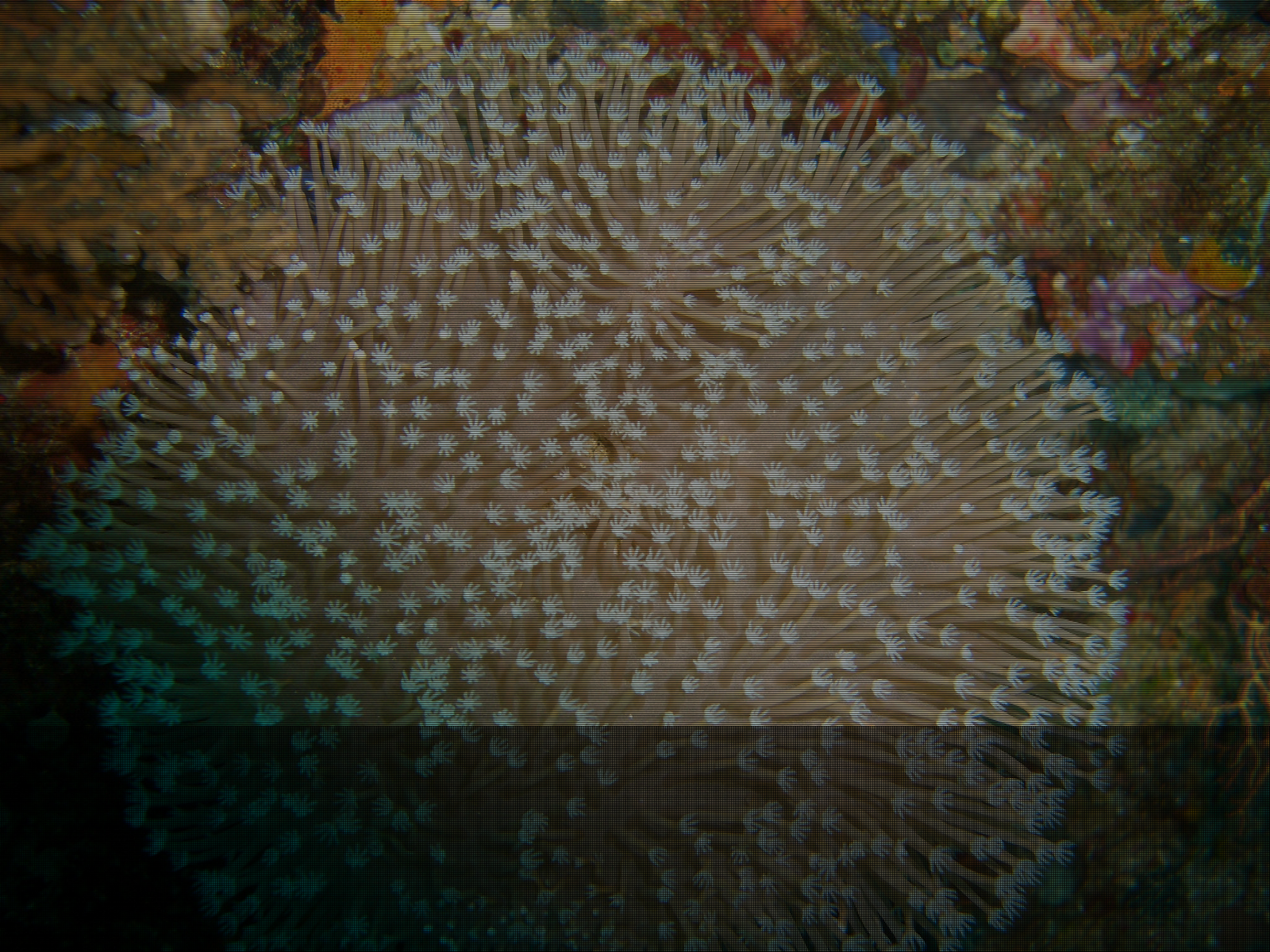
They should be nicely inflated with their polyps well extended. Sarcophyton, Cladiella, Sinularia and company periodically shed, during which the animal looks shrivelled, with its polyps closed, and then sheds a sort of transparent film. So it is sometimes hard to tell whether a soft coral is shrivelled because it is shedding or because it is unwell: when in doubt, buy only animals that are well extended with open polyps.
The same goes for Discosoma and Zoanthus: prefer polyps that are nicely open and examine the rock before buying them: watch out for Aiptasia and unwanted little snails such as nudibranchs or the Zoanthus-eating snail, Heliacus, white with black stripes.
Crustaceans.
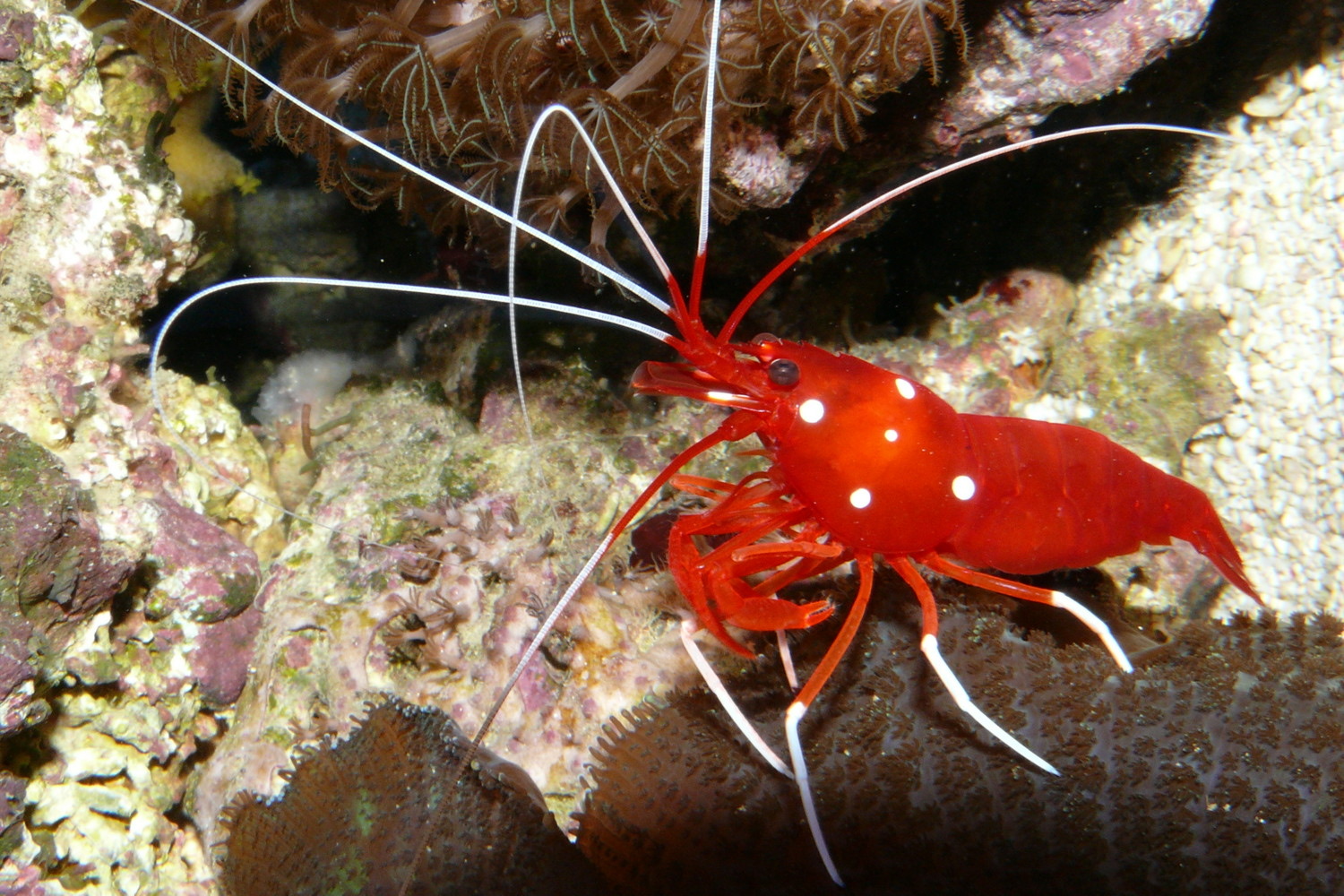
Before buying a shrimp or similar, check that it is nice and lively, with its antennae moving and busy looking for food on the bottom and among the rocks. Avoid buying very still specimens, even if they are more colourful; what matters is liveliness: among other things, when they keep very still it means they are about to moult or have just moulted, so the stress of transport could kill them.
If you buy hermit crabs, remember to get two or three extra shells from the shopkeeper, because, as we know, hermit crabs use them as a home and change them as they grow.
Warning: crustaceans must be acclimatised to the new tank. Put the bag in the tank to equalise the temperature, then, drop by drop, add a little aquarium water. After about a quarter of an hour you can release the animals.
How to acclimatise the new arrivals
- 1Temperature the floating bag equalises it
- 2Aquarium water add a little, drop by drop
- 3Out of the bag after about 15 minutes, release them
This applies to crustaceans and to molluscs too: snails, cowries and the like.
Urchins and brittle stars.
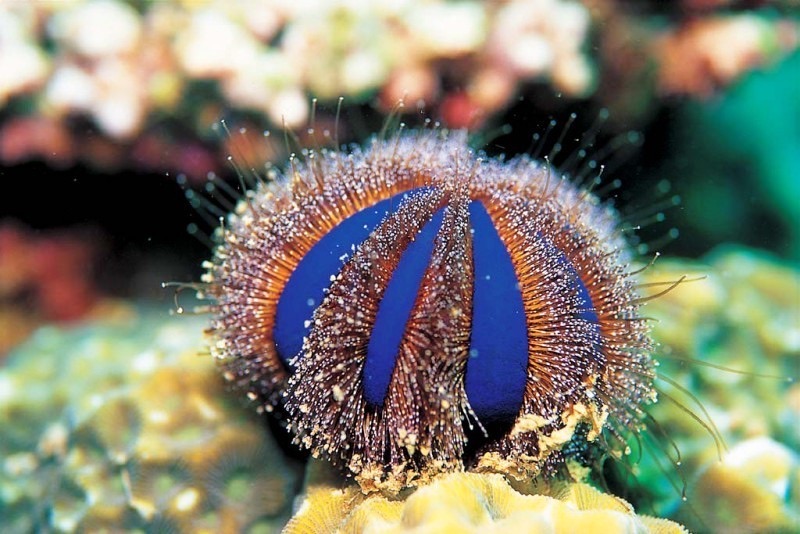
Before buying an urchin make sure it is healthy: it must not be losing its spines, a clear sign that it is unwell; also, when looked at closely, it should constantly move the thin tube feet it has between its spines. Another useful test is to try gently to move it: if healthy it stays firmly attached to the substrate and, once we stop disturbing it, "runs" (so to speak) to hide among the rocks.
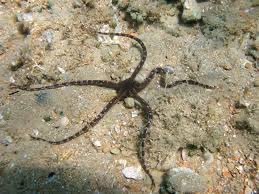
As for brittle stars, which are easy to keep, here too they should be nice and lively and quickly escape the shopkeeper trying to catch them; avoid them if they have damaged arms or look limp or lacking in vitality.
Molluscs.
Turbo or Trochus snails, and also cowries and the like, must be lively and on the move: prefer those you see crawling on the glass or the rocks, constantly busy grazing algae. If they are still on the bottom or on a rock, they should put up a lot of resistance if you try to detach them: if they come away at once and the foot looks a bit wrinkled and limp, forget it. Molluscs must also be acclimatised as described above for shrimps. Be aware that Turbo snails and the like are nocturnal animals, so don't worry if they stay still during the day.
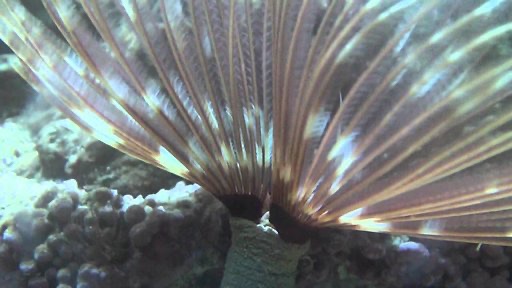
As for Spirographs and Coco Worms, make sure the worm is inside the tube it lives in. Also, the crown, that is the "flower" that emerges from the tube, should be nice and intact, with the plume not shrivelled. A healthy Spirograph pulls back sharply as soon as it sees a sudden shadow: try it and see by shading the lamps with your hand near the animal (with the shopkeeper's permission!!).
author: Metello Venè
Sources
- Kitahara M.V., Jaimes-Becerra A., Gamero-Mora E., Padilla G., Doonan L.B., Ward M., Marques A.C., Morandini A.C., Long P.F. (2020). Reciprocal transplantation of the heterotrophic coral Tubastraea coccinea (Scleractinia: Dendrophylliidae) between distinct habitats did not alter its venom toxin composition. Ecology and Evolution 10: 1794-1803.
- Fabricius K.E., Genin A., Benayahu Y. (1995). Flow-dependent herbivory and growth in zooxanthellae-free soft corals. Limnology and Oceanography 40(7): 1290-1301.
- WoRMS Editorial Board (2026). Lima scabra. World Register of Marine Species.
- McKeon C.S., Moore J.M. (2014). Species and size diversity in protective services offered by coral guard-crabs. PeerJ 2: e574.
- Yin Y., Wang J., Zheng X. (2025). Non-Bactericidal Antifouling Coating Inspired by the "Swinging Effect" of Coral Tentacles in Waves. Biomimetics 10(9): 606.
- Robertson R. (1967). Heliacus (Gastropoda: Architectonicidae) symbiotic with Zoanthiniaria (Coelenterata). Science 156: 246-248.
On the same topic
Guide to my first marine aquarium - Part two
The first inhabitants of the 90-litre cube: the snails, hermit crabs, shrimps and urchins that keep the tank clean,…
Guide to my first marine aquarium - Part one
No filter, no sand and home-made water: what you need for a 45 cm marine cube, how to start it step by step and how…
Chemistry and biomineralisation
KH, calcium and magnesium are not just numbers to keep stable: they are the bricks, the cement and the additive on…