
Fluconazole and Oodiniasis
Could a drug used against algae also act on a fish parasite? An open question
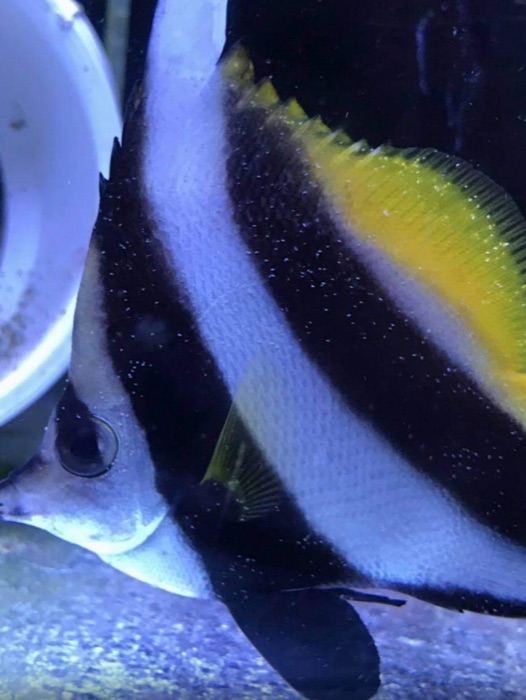
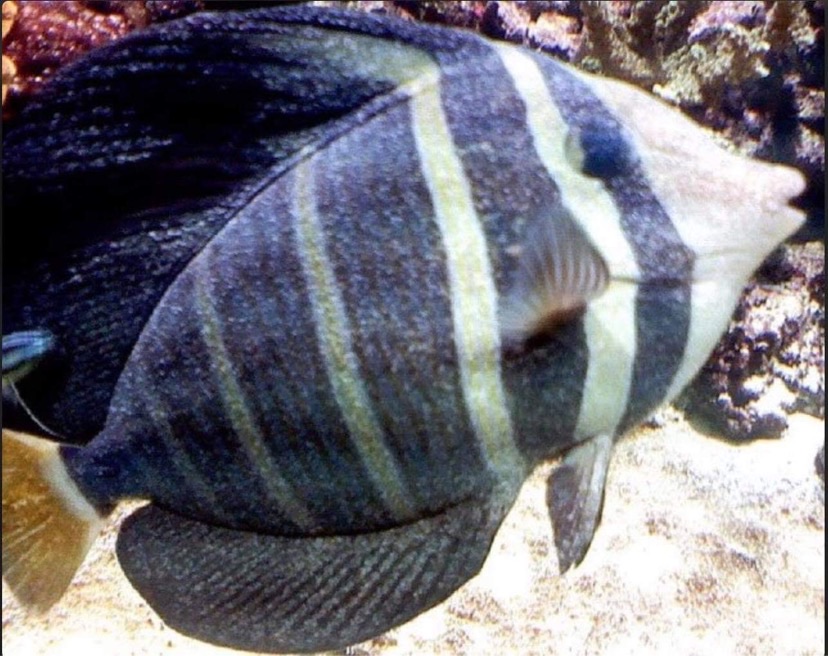
Recent indirect experiences would suggest that Fluconazole, now used successfully to eradicate Derbesia and Bryopsis from our aquariums, is able to counteract an infection that often afflicts the fishes in our aquariums: Oodiniasis. Three of our aquarist friends, Valente Damiano, Francesco Accorinti and Alessandro Natale, recently shared some posts in which they report that having had to use Fluconazole to solve an algae problem, they had noticed a complete recovery of some fish that suffered from Oodiniasis at that time.
What three aquarists reported
- 1Algae Derbesia and Bryopsis, the problem being treated
- 2Fish with Oodiniasis the disease present at that time
- 3Fluconazole used for the algae, not for the fish
- 4Reported recovery some fish recovered completely
These are indirect reports, not a study: the author himself says it is too early to be certain.
The parasite and the hypothesis
For the uninitiated, Oodiniasis is an infection caused by a Dinoflagellate, Amyloodinium ocellatum.
Three stages: on the fish, on the bottom, in the water
- 1Trophont attached to the gills and skin of the fish
- 2Tomont falls to the bottom, forms a cyst and divides
- 3Dinospores swim to find a fish; infective for up to 15 days
Amyloodinium ocellatum is a dinoflagellate: only part of its life is spent on the fish.
The interesting aspect that makes us think is that ergosterols, of which Fluconazole blocks the biosynthesis, are present in the cell membranes of many species of Dinoflagellates. It is therefore not excluded that these constituents are also present in this type of Dinoflagellates and that their inhibition may be deleterious to their survival. If all this were confirmed by further experiences in this regard, it would in fact be a really important discovery, which would avoid numerous headaches related to this disease.
An idea to test: does it hit the parasite's membrane?
- 1Fluconazole a prescription medicine
- 2Blocked synthesis it blocks the making of ergosterols, says the author
- 3Cell membrane author: ergosterols occur in many dinoflagellates
- 4The open question are they in this parasite, and does that harm it?
It is a hypothesis, not a result: every step on the right still has to be confirmed.
Current treatments
I remember that currently for the treatment of Oodiniasis reference is made to methods that are difficult to implement as they involve the use of drugs that are difficult to manage: Copper salts and drugs such as quinine which, if not used at their best, can cause serious problems to the tank.
Fluconazole, on the other hand, now seems to have passed numerous tests and proved to be well tolerated by the aquarium ecosystem. It is still too early to be able to say with certainty that Fluconazole is effective against Oodiniasis: there is a lack of further experience in this regard. I would therefore like to make an appeal, on behalf of all fans, to anyone who decides to experiment with the drug for this eventuality, to kindly share their experience with the rest of the group. Anyone wishing can also contact me directly through Messenger or the Ballingmania website.
Prescription and resistance
I take this opportunity to point out that Fluconazole is subject to medical / veterinary prescription and therefore cannot be used except on the prescription of a Veterinarian. It is also useful to specify that the use of antibiotic drugs can induce phenomena of antibiotic resistance and that their use must always be recommended by the Veterinarian who will evaluate the advisability of using them from time to time. Thanks again. I thank Damiano Valente, Francesco Accorinti and Alessandro Natale for bringing back their precious experience and my friend Marco Paci for their fundamental collaboration.
With regard, Giuseppe Ossolengo
Sources
- WoRMS Editorial Board (2026). Amyloodinium ocellatum. World Register of Marine Species.
- Dhayanithi N.B., Sudhagar A., Kumar T.T.A., Lal K.K. (2022). Study on amyloodiniosis outbreak in captive-bred percula clownfish (Amphiprion percula) and improved control regimens. Journal of Parasitic Diseases 46(4): 1103-1109.
- U.S. National Library of Medicine (2018). Fluconazole: MedlinePlus Drug Information. MedlinePlus.
- Centers for Disease Control and Prevention (2026). Antimicrobial-Resistant Fungal Diseases. CDC.
- Amo M., Suzuki N., Kawamura H., Yamaguchi A., Takano Y., Horiguchi T. (2010). Sterol composition of dinoflagellates: Different abundance and composition in heterotrophic species and resting cysts. Geochemical Journal 44(3): 225-231.
On the same topic
Euphyllia: parasites, treatment, husbandry
A garden of Euphyllia is very rewarding, but these corals suffer from swings and parasites. The values to keep, how…
Oodiniasis, or Marine Velvet Disease
What velvet is, where it attacks the fish, how to recognise it and which remedies have been used, with notes on…
Fluconazole and marine velvet (Amyloodinium)
Some second-hand experiences suggest that fluconazole may fight marine velvet. The parasite, the ergosterol…