
At a glance
Data from the scientific sources listed at the bottom.
Conservation
IUCN Red List: not evaluated.
Where it lives
The living species are found all over the world; the sources read do not give a list of seas for the whole class. 2
How to recognise it
Tap a number on the photo: the key explains what to look for.
Life in the wild
What it eats
Most intertidal species eat algae and other organisms growing on the rocks, which they scrape off with the radula, a ribbon covered in teeth. 4 5 Diet varies with species and place: in Acanthopleura japonica red algae were the most abundant food (37%), with remains of bivalves and mites; other studies cited report diatoms and coralline algae, or mainly nematodes. 4
In the aquarium
From the experience of the BallingMania community.
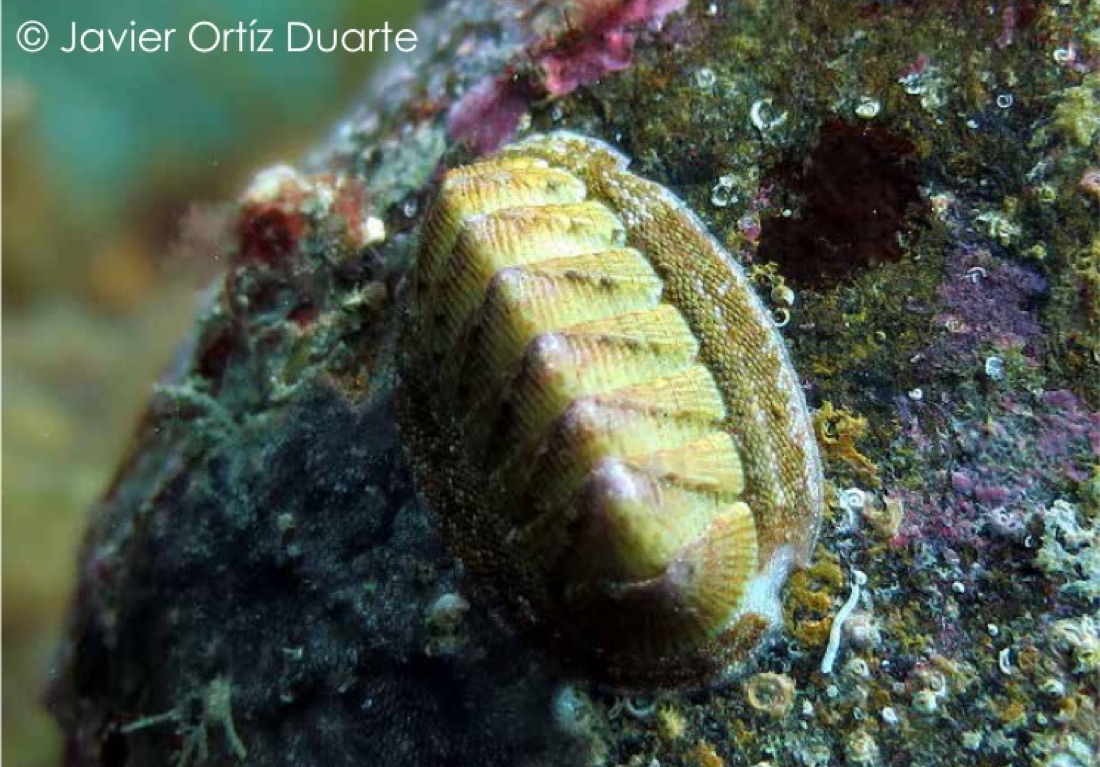
Chitons are small, and in some cases large, marine molluscs of the class Polyplacophora. Identification is simple thanks to the oval dorsal shell, made up of plates (8 in living species), which also give the class its name. These plates are set into the mantle, which extends to the edge of the animal, forming the perinotum, a cuticle-covered flap that surrounds and links them and, being flexible, allows them to articulate. Chitons live and move on rocky surfaces and feed on algae, bryozoans, diatoms and sometimes bacteria, scraping the rocky substrate with their well-developed radula. They are excellent algae eaters and do not harm corals; the only drawback is that they also feed on the coralline algae that some aquarists love.
good or bad?
VERDICT:
Key: Good! An organism beneficial to the system. Reef Safe!
An organism whose benign or harmful nature is not yet known, to be kept an eye on.
Bad! The organism is a threat to the other inhabitants of the aquarium or could become a pest.
A food source for the other inhabitants of the aquarium.
A potentially toxic or venomous organism.
© Javier Ortíz Duarte · © Leon Altoff
Did you know?
Sources
- WoRMS Editorial Board (2026). Polyplacophora Gray, 1821. World Register of Marine Species.
- Stebbins, T.D.; Eernisse, D.J. (2009). Chitons (Mollusca: Polyplacophora) known from benthic monitoring programs in the Southern California Bight. The Festivus 41(6): 53-100.
- Sigwart, J.D.; Vermeij, G.J.; Hoyer, P. (2019). Why do chitons curl into a ball?. Biology Letters 15(10): 20190429.
- Matsumoto, R.; Kon, K. (2023). Food habit of chiton Acanthopleura japonica from Jogashima, Miura peninsula, Kanagawa prefecture, Japan. La mer 61: 13-18.
- Nemoto, M.; Ren, D.; Herrera, S.; Pan, S.; Tamura, T.; Inagaki, K.; Kisailus, D. (2019). Integrated transcriptomic and proteomic analyses of a molecular mechanism of radular teeth biomineralization in Cryptochiton stelleri. Scientific Reports 9: 856.
- SeaLifeBase (2026). Leptochiton belknapi Dall, 1878 (nota generale sulla classe Polyplacophora). SeaLifeBase.
Sources checked on 5 November 2026. Community texts and ratings are kept separate from the scientific data.