
Using clay mineral compounds in the marine aquarium
Tiny particles, huge surface: how clays work in the tank
Today clay mineral compounds are widely used in many fields, from agriculture, chemistry and medicine to waste-water treatment and, why not, in our modern reef aquariums too. Let's look at the features that make this kind of compound so useful.
Structure and surface
In nature there are many types of clay minerals, some very different from each other, but they all have in common a large surface area in relation to their small size, and it is precisely this feature that makes them so special. The secret of how they work lies in the crystal structure of their lattice, generally formed by Si-O-Al bridges (aluminosilicates); the succession of these bonds leads the compound's structure to form real molecular "clusters" which, depending on the repulsive and attractive forces, arrange themselves into both tetrahedral and octahedral structural patterns:
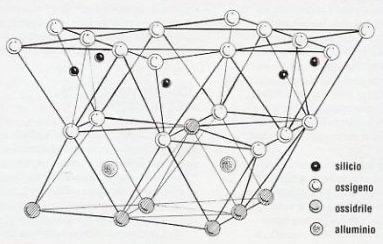
How silicon, oxygen and aluminium bond
- 1Silicon (Si) at the centre of the tetrahedra
- 2Aluminium (Al) at the centre of the octahedra
- 3Oxygen (O) at the corners of each unit
- 4Si-O-Al bridge the shared oxygen joins the two layers
Simplified diagram: repeated Si-O-Al bridges build the crystal lattice.
Sources: [1]
What adsorption is
The term adsorption means the ability to take up liquid or gaseous molecules (the adsorbate) onto the surfaces of a solid (the adsorbent); this can happen through either physical or chemical processes:
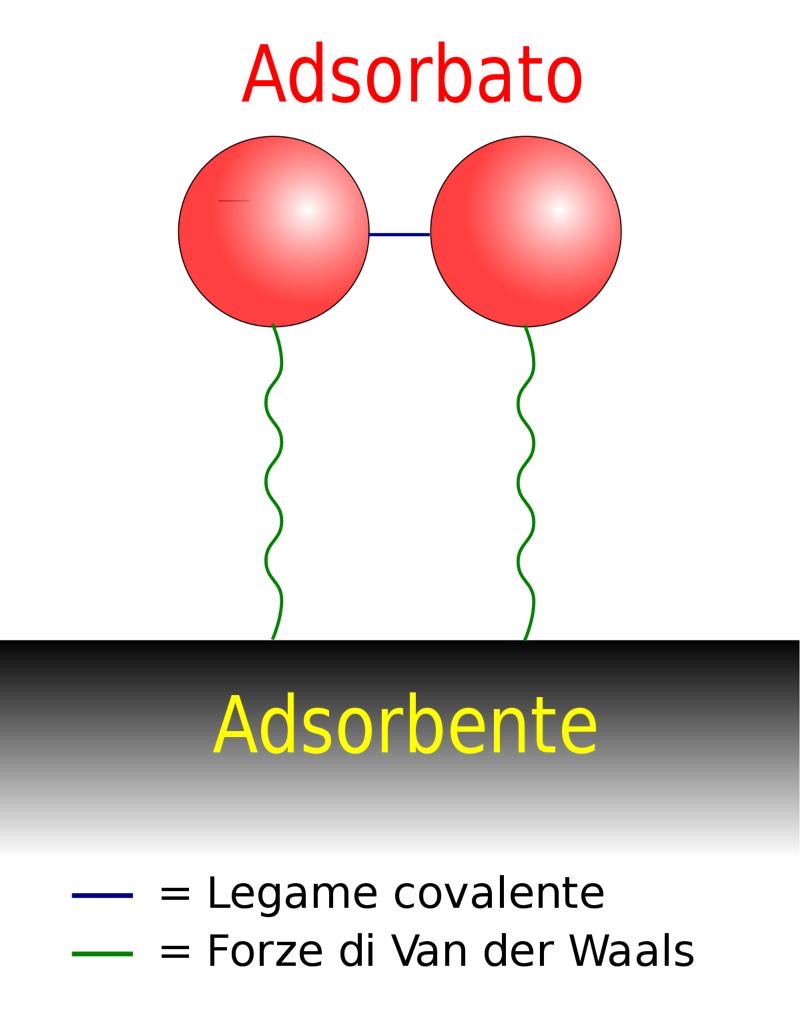
Physical adsorption (FIG. A): It is a surface phenomenon, with relatively weak bonds between adsorbent and adsorbate:
- Van der Waals forces
- Reversible dipole-dipole electrostatic charges
- Kinetically fast
- Able to form several layers of adsorbate on the solid's surface
Adsorption/chemical bonding (FIG. B): It involves real chemical bonds, ionic and/or covalent:
- Chemical bonds, which may be irreversible
- Specific to certain elements only
- Kinetically slow
- Able to bind only a single layer of adsorbate on the surface
Physical adsorption and chemical bonding
- 1Adsorbent the solid's surface
- 2Several layers adsorbate in several layers, fast and reversible
- 3Weak bonds Van der Waals and dipole-dipole
- 4A single layer adsorbate on the surface, slow
- 5Chemical bond ionic or covalent, possibly irreversible
- 6Specific only for certain elements: the others stay free
Physical: weak, fast, multi-layer. Chemical: strong, slow, specific, single-layer.
The advantage of small size
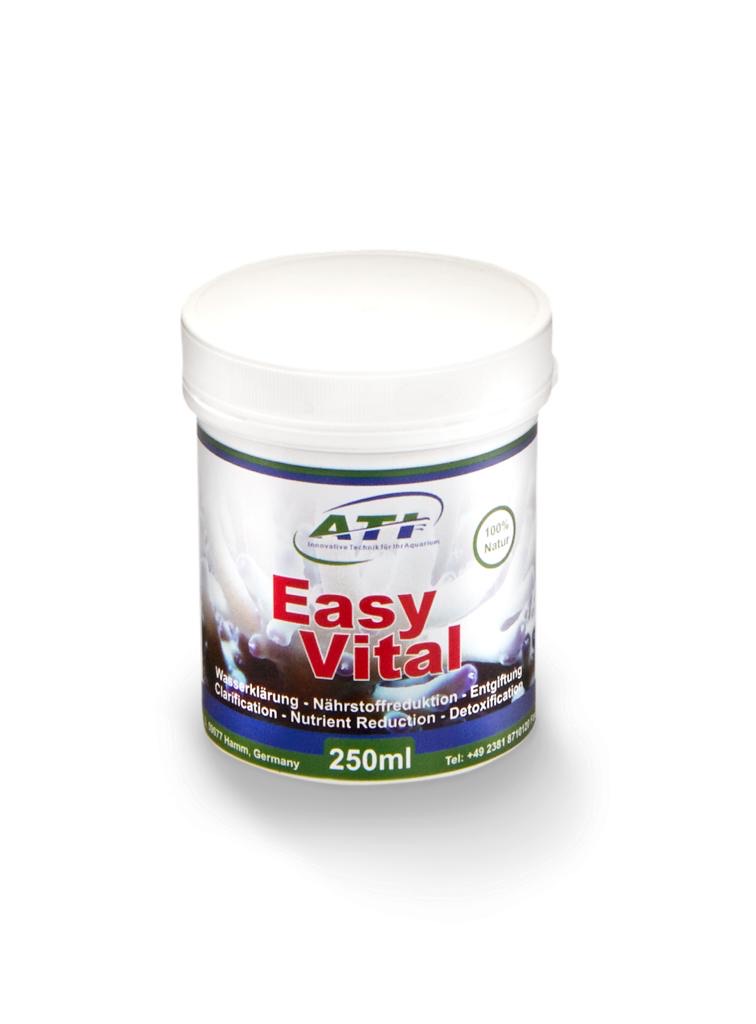
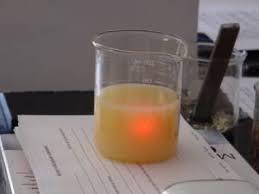
Seeing the above, many readers will find it familiar: adsorption is in fact already very often used through activated carbon, and the crystal structure is shared with zeolites. So what is the real advantage of using clay minerals? The answer, and the extra weapon of these compounds, lies in their size: products such as ATI Easy Vital are made of very small, impalpable clays. When preparing the compound (the manufacturer recommends 1 teaspoon per 75 gallons, first dissolved in a cup of tank water), 10-15 minutes of preparation will be enough, stirring the mix to break up lumps and make the solution as even as possible; this product is completely natural and contains no enzymes, chemical additives and/or drugs.
The colloidal solution
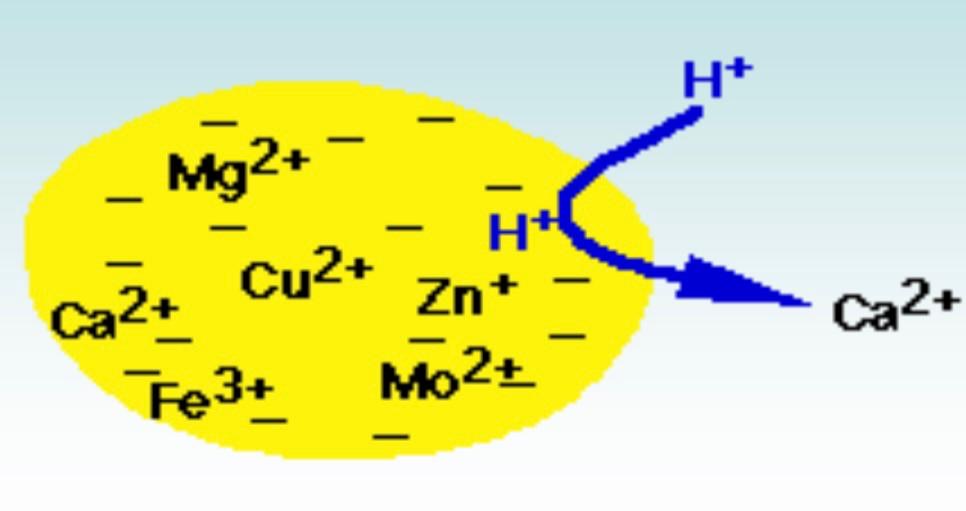
The colloidal solution is made up of tiny suspended solid particles and the electrostatic charge these particles keep. These features at the liquid-solid layer cause a change in the outer crystal structure of the clay solid, modifying the outer surface of the mineral fragment and creating cavities and irregularities of every kind, including those due to partial dissolution. The direct consequence of this phenomenon is that the mineral particles do not have neutral surfaces, but carry electrical charges that can then interact and bond with the elements in the water, especially with positively charged metals such as the heavy metals in our tanks.
A charged surface that attracts metals
- 1Mineral particle small, with a large surface
- 2Cavities, irregularities also from partial dissolution
- 3Electrical charges the surface is not neutral
- 4Positive metals copper, zinc, cadmium: according to ATI
- 5Ammonium ion has an affinity for aluminosilicates
The charges on the surface bind what is in the water, especially positively charged metals.
Sources: [1]
When the prepared compound is then poured over a circulation pump, it immediately spreads through the whole tank, reaching every possible nook, without needing reactors or forced water flow, and stays suspended in the water for a few hours thanks to its tiny size. Its detoxifying action is linked to this state, and once it is over (within 1-2 hours) the excess and the aggregated compounds flocculate and are skimmed out and/or caught by filters of every kind.
The compound's path through the tank
- 1In the cup 1 teaspoon per 75 gallons, in tank water (manufacturer's dose)
- 2Stir 10-15 minutes to break up lumps
- 3Over the pump the compound spreads at once
- 4Suspended for hours reaches every nook
- 5Flocculation after acting, within 1-2 hours
- 6Skimmed or filtered so the excess leaves the tank
No reactors or forced flow: the compound travels with the water and is then removed by the skimmer or filters.
To sum up
To sum up, we can say that this kind of product combines adsorption effects like those of activated carbon (although carbon remains better suited to high-molecular-weight organic compounds), for example in clarifying the water, reducing the ammonium load and so future nitrates, and helping the bacteria in their work (the affinity of aluminosilicates for the ammonium ion, as with zeolites), with the detoxifying action of clays (ATI states it removes chlorine, heavy metals, copper, zinc, cadmium, residues of toxins and medicines, and more). If we add that there is no risk of overdosing, that the compound stays reactive in the water only briefly, that it can be dosed when in doubt or occasionally, even as an extra to lower nutrients in the tank, all combined with the low cost of the raw material, it is clear that the advantages for the reefkeeper are considerable.
Author: M. Paci
Sources
- Bhattacharyya K.G., Sen Gupta S. (2008). Adsorption of a few heavy metals on natural and modified kaolinite and montmorillonite: A review. Advances in Colloid and Interface Science 140: 114-131.
- Sengco M.R., Anderson D.M. (2004). Controlling harmful algal blooms through clay flocculation. Journal of Eukaryotic Microbiology 51: 169-172.
- Erftemeijer P.L.A., Riegl B., Hoeksema B.W., Todd P.A. (2012). Environmental impacts of dredging and other sediment disturbances on corals: A review. Marine Pollution Bulletin 64: 1737-1765.
On the same topic
Chemistry and biomineralisation
KH, calcium and magnesium are not just numbers to keep stable: they are the bricks, the cement and the additive on…
Trace elements and metals
Elements we weigh in micrograms per litre but that govern entire biochemical reactions. Chapter 4: what they are for,…
pH, total alkalinity, KH and how they interact
A refresher on pH, total alkalinity and KH, then what you learn by combining the three measurements: the role of CO2,…