
Trace elements and the Balling system
Do water changes and Balling replace trace elements? The answer is less obvious than it seems
RTN, STN and coral bleaching
There are two Balling methods: 2-part and 3-part (simply 2 parts (bottles) that we dose for calcium and carbonate, and 3 parts (bottles) with the addition of solution C, which we will look at later). Today we will look at 3-part Balling, the one most used by us reefkeepers. Let's start with the two classic questions each of us has asked during this wonderful hobby:
- do water changes replace trace elements?
- does the Balling method replace trace elements?
Two questions we have asked and keep asking ourselves, and the answer is actually ………… both!! 🙂 Let's see why… Let's start by looking briefly at the natural composition of seawater, ocean water. I should say that these are not exact numbers (just to give some reference points), but they will give you an idea of what we are talking about and why.
Salinity
70% of the mineral content of seawater is made up of one ion, sodium chloride (table salt), and the remaining 30% is a whole group of other major, minor and trace elements (copper, boron, vanadium, iron, magnesium, iodine, to name a few, just to understand what this group is).
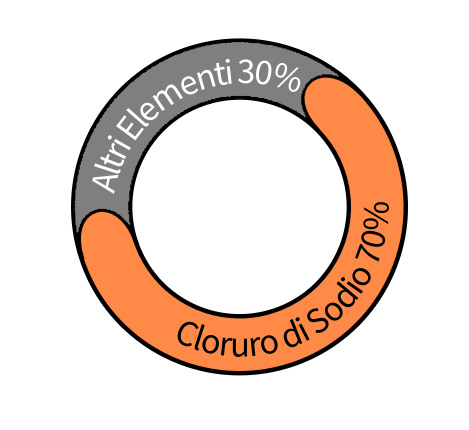
So when we test the salinity in our tanks it could be 70% sodium chloride and 30% everything else, or we could have 100% chloride. In both cases we will read 35 parts per thousand on our refractometer (that is, the salts dissolved per litre of water. It means that out of 1000 grams of solution, water plus salts, 35 grams are salt and 965 grams pure water. A mistake I often hear is saying 35 grams of salt per litre of RO water, which, as we have just seen, is not correct).
What 35 per thousand really means
- 1Pure water 965 g out of 1000 g of solution
- 2Salt 35 g out of 1000 g of solution
- 3Solution water plus salts: 1000 g
- 4Not 35 g per litre added to a litre of RO water
The 35 grams are counted out of 1000 grams of solution, not per litre of RO water.
Now, we do not know the exact chemical composition of our tank. If we tried to keep corals in an aquarium made up of 100% sodium chloride, all the corals would die. First of all there would be little or none of elements such as calcium and carbonate (alkalinity) for skeletal growth, and secondly all the other major, minor and trace elements that are absolutely essential for coral health would be missing. So for proper management we use "seawater" (RO water plus powdered salt) containing 70% sodium chloride and 30% all the other elements. Easy …. 🙂😊
The two-part mix
Now let's look briefly at the problem we have with the two-part MIX. Corals consume
- Alkalinity
- Calcium
- Magnesium
and major, minor and trace elements to build their skeletons.
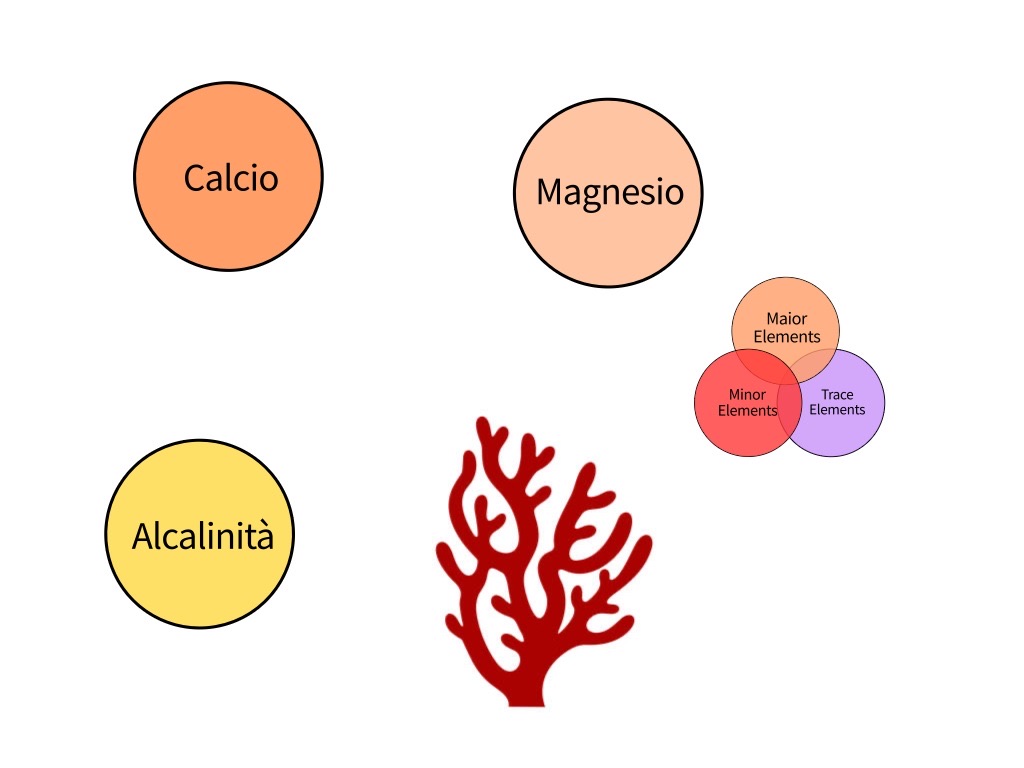
This is why we test alkalinity (KH) and calcium often. Corals build their skeleton out of calcium carbonate. They take the calcium from calcium chloride and the carbonate from sodium carbonate or bicarbonate.
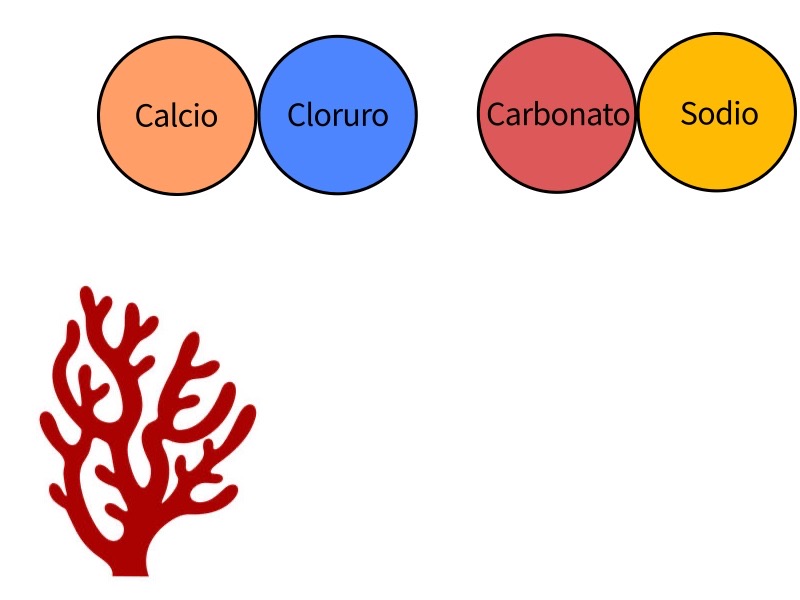
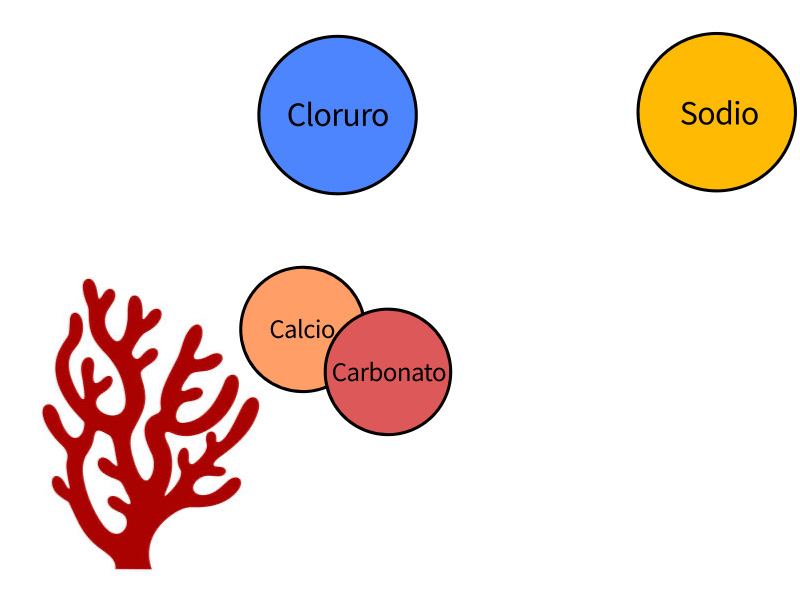
So what happens to the chloride left over from the calcium chloride and the sodium left over from the sodium bicarbonate??? They simply combine to form sodium chloride (ordinary table salt).
Where the leftover sodium chloride comes from
- 1Calcium chloride the first part: supplies calcium
- 2Sodium bicarbonate the second: supplies carbonate
- 3Coral uses calcium and carbonate for its skeleton
- 4Sodium chloride leftover chloride and sodium combine
Each dose leaves a little chloride and sodium: ordinary table salt.
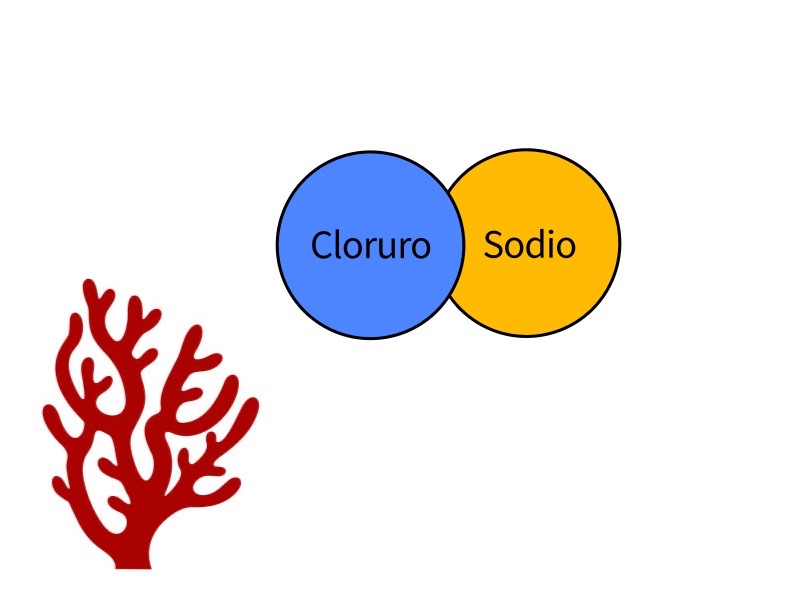
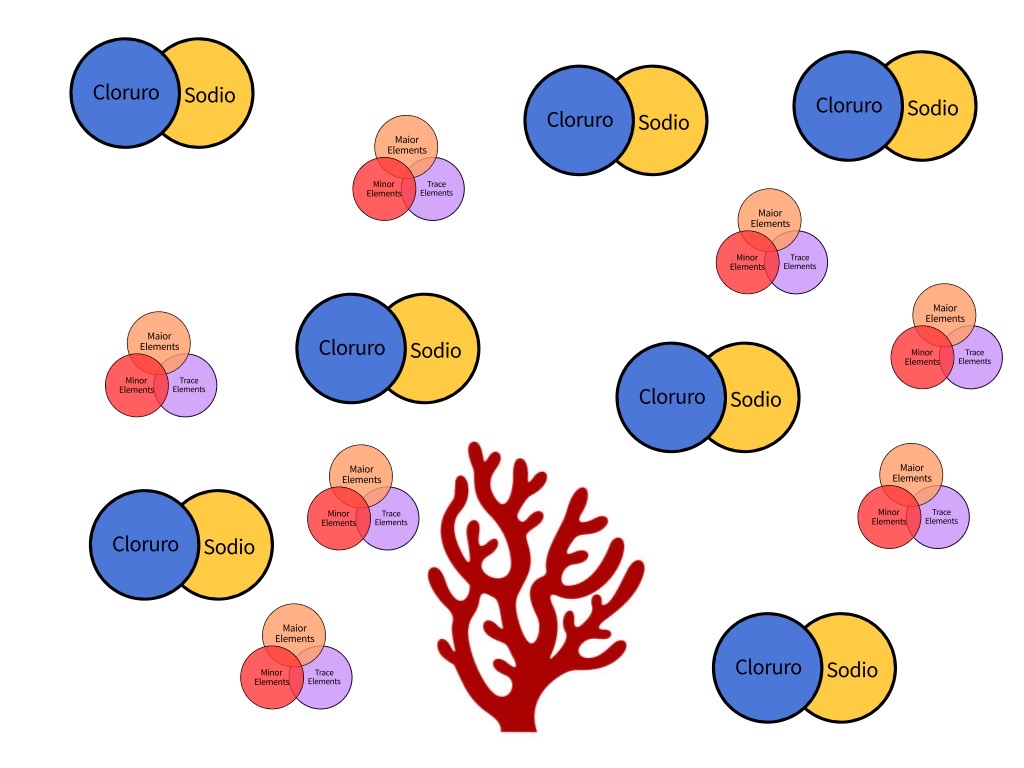
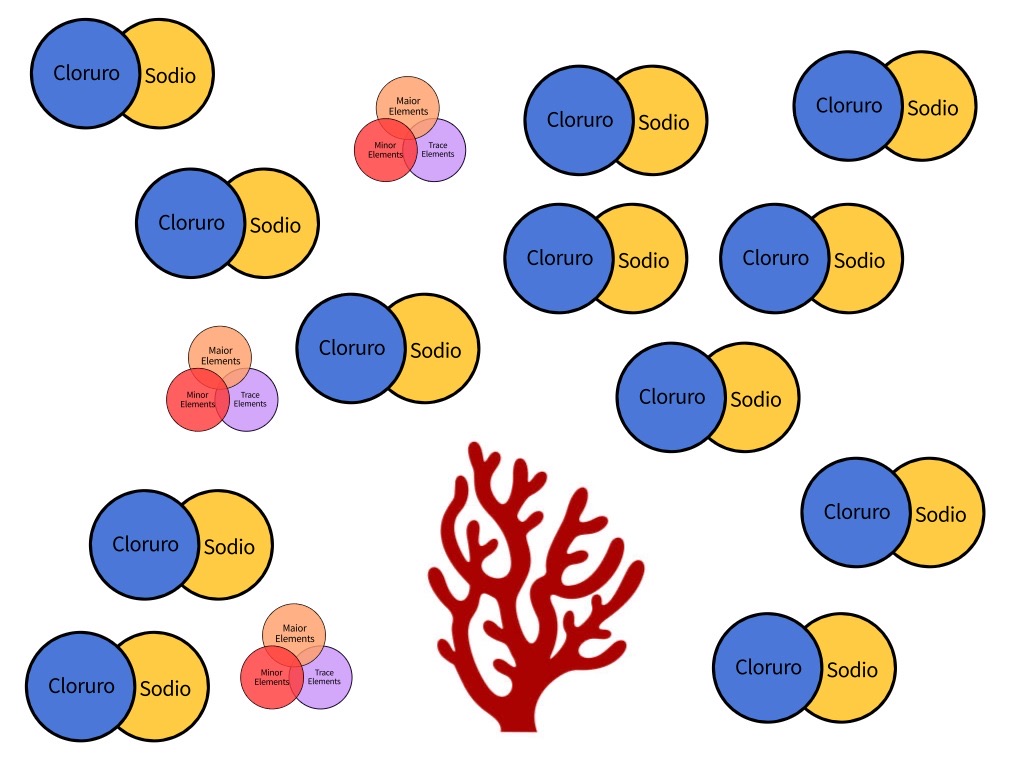
So the more calcium and carbonate our corals consume, the more we have to replace. This two-part dosing will raise the concentration of sodium chloride relative to all the other elements in the water. Since the salinity of the water is about 70% sodium chloride and 30% other elements, this means that as the concentration of sodium chloride rises there will be less room for the other elements. Over time the ratio between sodium chloride and everything else gets completely out of control. Instead of 70/30 we could have 75/25, 80/20, 90/10 or even worse. The classic water change can certainly help ease this problem, but only a 100% change can bring the ratio back to 70/30. But let's be honest, that is not feasible either in cost or in management.
More sodium chloride, less room for the rest
- 1Sodium chloride rises with every two-part dose
- 2All the other elements major, minor and trace
- 3Time the ratio gets out of control
The salinity reading stays the same, but what is in it changes.
Do water changes replace trace elements?
And so we come to the answer to the first question…
NO…
Water changes do not replace trace elements.
It is actually quite simple.
If you do a 10% change you supply 10% of everything the tank needs. If the corals have consumed, for example, 100 ions of calcium carbonate, with the change I will replace only 10%, or 10 ions of calcium carbonate. The same goes for trace elements. If corals consume 10 parts of various trace elements, a 10% change supplies only one part of them. So yes, doing a water change is useful, but we will never be able to keep up with the rate at which these elements are consumed.
A 10% change puts back 10%
- 1Water changed 10% of the tank's water
- 2Not put back 90 out of 100 still to be replaced
- 3Put back 10 out of 100, as in the example
The change is useful, but cannot keep up with consumption. The same goes for trace elements.
Does the Balling method replace trace elements?
Time to move on to the question:
Does the Balling method replace trace elements???
And this time too my answer is…
NO…
The Balling method does not replace trace elements.
The Balling Method solves the build-up of sodium chloride we explained earlier. With the Balling Method (to be clear, Triton CORE7, ATI ESSENTIALS PRO) you can keep that 70/30 ratio, but you will still have to do water changes or add some of these elements.
But then you will be asking: so Giovanni………… how on earth does it all work??
Well…
The Balling Method comes in THREE PARTS.
- Solution A - Calcium chloride
- Solution B - Sodium bicarbonate
- Solution C - Everything else in seawater
Solution C is the answer to the problem of traditional two-part dosing. Why… As we said before, corals take calcium from calcium chloride and carbonate from sodium carbonate (the leftovers, as we saw, create sodium chloride); solution C adds just enough of each major, minor and trace element to balance the sodium chloride just created, keeping that 70/30 salinity ratio…
Three solutions and a ratio to keep
- 1Solution A calcium chloride
- 2Solution B sodium bicarbonate
- 3Solution C everything else in seawater
- 4Coral uses calcium and carbonate
- 5Sodium chloride forms from the leftovers of A and B
- 6Other elements balance the sodium chloride
Solution C is there to keep the ratio, not to replace everything the corals use up.
This part is very important, and it is where I focused all my efforts to understand the process in detail. I sum it up like this:
The aim of the Balling Method is to keep a perfect balance of 70% sodium chloride and 30% every other element (major, minor and trace).
Over time corals will also consume this group of elements (major, minor, trace elements), and so, as time goes by, some elements will have to be dosed. This varies from tank to tank, because the consumption of the whole process differs with each tank's make-up: fish, corals, sponges, etc.
The two best-known Balling products
Here is some information on the two best-known Balling products, which I consider the best to choose from.
I mean ATI ESSENTIALS PRO and TRITON CORE7. Many people compare ATI ESSENTIALS PRO with TRITON CORE7 because they are both German-made products. Although they share many similarities, there are also some significant differences between them. Both ATI Essentials Pro and Triton Core7 contain essential major and minor elements. I hope this helps you better understand the chemical bonds that form in our tanks and why, when doing an ICP test, some values sometimes come out high or low. I would also add that an ICP test can only read elements, and not all of them: for example nitrates and phosphates (it detects phosphorus) 4. This also applies to alkalinity, which is NOT AN ELEMENT but the sum of elements (salts) that gives its value 5.
As always, happy reefing to all!!
Article written by Giovanni Ciuccio
Sources
- NOAA (2026). Why is the ocean salty?. National Ocean Service.
- The Open University (s.d.). The oceans: 3.1 Salt in the oceans. OpenLearn.
- Biscéré T., Ferrier-Pagès C., Gilbert A., Pichler T., Houlbrèque F. (2018). Evidence for mitigation of coral bleaching by manganese. Scientific Reports.
- U.S. Environmental Protection Agency (1994). Method 200.7, Revision 4.4: Determination of Metals and Trace Elements in Water and Wastes by Inductively Coupled Plasma-Atomic Emission Spectrometry. EPA.
- Dickson A.G., Sabine C.L., Christian J.R. (eds.) (2007). Guide to Best Practices for Ocean CO2 Measurements, chapter 2. PICES Special Publication 3.
On the same topic
Basic guide to the Balling method
The guide for beginners: what the Triad is, what the three containers and the dosing pumps are for, which values to…
Advanced guide to the Balling method
The follow-up to the basic guide: why sodium and chloride build up, how to prepare the KH, calcium, magnesium and…
Chemistry and biomineralisation
KH, calcium and magnesium are not just numbers to keep stable: they are the bricks, the cement and the additive on…