
Managing the Triad: calcium, magnesium, KH
The three values that keep pH stable and make corals grow
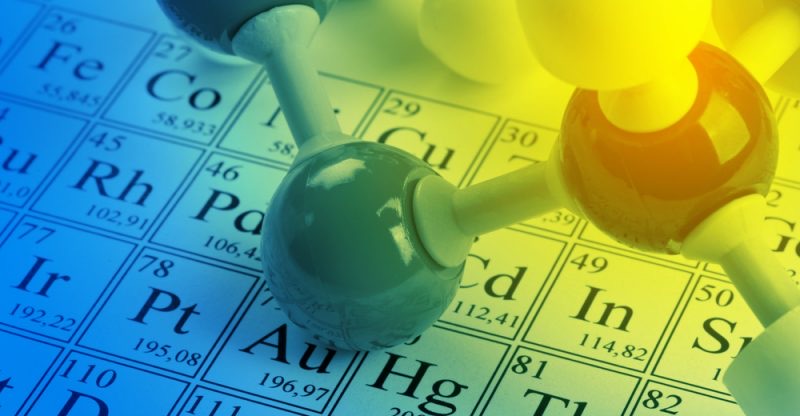
Managing the Triad in the marine aquarium
The so-called "Triad" is made up of three chemical elements: Calcium, Magnesium and KH. The stability and correct balance of these chemical compounds are among the factors that determine a stable pH.
From the outset, constant monitoring of the Triad is recommended, using the dedicated chemical test kits available from aquarium shops.

As a general rule, please note that the correct balance between calcium and magnesium ions is closely linked to whether KH is trending up or down; therefore a "Triad in line and balanced" is essential for running a reef aquarium properly, above all for keeping corals in the SPS and LPS categories.
Three values that work together
- 1Calcium (Ca) for healthy coral growth
- 2Magnesium (Mg) takes part in skeleton growth
- 3KH carbonates and bicarbonates
- 4Stable pH also depends on the balance
- 5SPS and LPS corals for them the Triad is essential
- 6Coralline algae they use magnesium too
The stability and balance of calcium, magnesium and KH are among the factors that determine a stable pH.
Calcium
In particular, the Ca (calcium) value must fall within the range 390/420 mg/l. This concentration is essential for healthy coral growth, especially for those in the SPS and LPS groups.
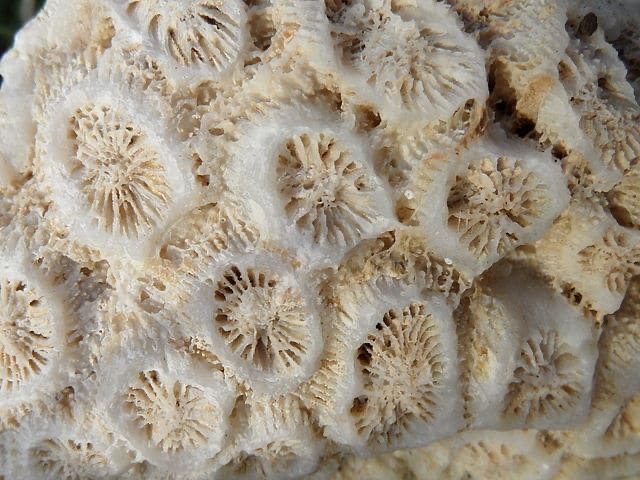
Note that the calcium value can rise or fall with salinity, which is why it is strongly recommended to keep the specific gravity in the range 1023/1025; in this way we give our corals more soluble calcium in the tank, bearing in mind that concentrations of about 420 mg/l are found in nature. I would like to point out that higher calcium concentrations do not make corals grow more, but could cause salts to precipitate and, as a result, tissue to recede on the corals.
Too much calcium: the risk the author points out
- 1Within range healthy coral growth
- 2Same size according to the author, no extra growth
- 3Salt precipitation forms with too much calcium
- 4Tissue recession a possible effect on corals
The author keeps calcium between 390 and 420 mg/l: above that, the risk is salt precipitation.
Magnesium
Mg (magnesium), just like Ca, takes part in the growth of the skeleton of corals and coralline algae; its ideal range is as follows: 1300/1350 mg/l.

Whenever the concentration drops below 1250 mg/l, we will see instability in the calcium ions.
KH
KH indicates the total of carbonates and bicarbonates. It is called "temporary carbonate hardness" because the carbonates in the water turn into other chemical compounds. I personally keep only so-called stony corals, and I have found that the ideal KH value should fall within the range 6.5/8.5, also considering that natural seawater has a concentration of around 7 to 8 degrees.
pH
Whenever pH is below 8.1 we may find higher concentrations of calcium and magnesium, because the corals slow down calcification; as a result we will see that some coral branches may be elongated and brittle, or there may even be no growth at all.
Below 8.1 corals calcify less
- 1Compact coral with pH within the stated values
- 2pH below 8.1 calcification slows down
- 3Calcium and magnesium higher concentrations are measured
- 4Long, brittle branches or even no growth at all
If corals calcify less, calcium and magnesium stay in the water.
Summary
To sum up, here in detail are the ranges for the Triad and pH:
- CALCIUM: 390/420 mg/l
- MAGNESIUM: 1300/1350 mg/l
- KH 6.5/8.5 degrees
- PH 8.2/8.4
The values recommended by the author
Below 1250 mg/l of magnesium, instability is seen in the calcium ions.
Corrections
If you need to correct one of the three elements of the Triad, it is strongly recommended to let 24 hours pass between one dose of buffer and the next. Of course, it is recommended to carry out the relevant tests at regular intervals: this way we will be able to assess the exact amount and requirement of the three compounds in the tank.
One dose at a time
- 1Test at regular intervals
- 2Correction one dose of buffer
- 3Wait 24 hours before the next
- 4Reassess amount and requirement
Repeated tests tell you the exact amount and requirement of the three compounds in the tank.
author: Ciro Murino
Sources
- He H., Li Y., Wang S., Ma Q., Pan Y. (2020). A High Precision Method for Calcium Determination in Seawater Using Ion Chromatography. Frontiers in Marine Science 7: 231.
- Moras C.A., Cyronak T., Bach L.T., Joannes-Boyau R., Schulz K.G. (2024). Effects of grain size and seawater salinity on magnesium hydroxide dissolution and secondary calcium carbonate precipitation kinetics: implications for ocean alkalinity enhancement. Biogeosciences 21: 3463-3475.
- Middelburg J.J., Soetaert K., Hagens M. (2020). Ocean Alkalinity, Buffering and Biogeochemical Processes. Reviews of Geophysics 58(3): e2019RG000681.
- Marshall A.T., Clode P.L. (2002). Effect of increased calcium concentration in sea water on calcification and photosynthesis in the scleractinian coral Galaxea fascicularis. Journal of Experimental Biology 205(14): 2107-2113.
- Rushdi A., Pytkowicz R.M., Suess E., Chen C.T. (1992). The effect of Mg-to-Ca ratios in artificial seawater, at different ionic products, upon the induction time, and the mineralogy of calcium carbonate: a laboratory study. Geologische Rundschau 81(2): 571-578.
- Chan N.C.S., Connolly S.R. (2013). Sensitivity of coral calcification to ocean acidification: a meta-analysis. Global Change Biology 19(1): 282-290.
- NOAA (2026). Ocean acidification. National Oceanic and Atmospheric Administration.
On the same topic
Chemistry and biomineralisation
KH, calcium and magnesium are not just numbers to keep stable: they are the bricks, the cement and the additive on…
Trace elements and metals
Elements we weigh in micrograms per litre but that govern entire biochemical reactions. Chapter 4: what they are for,…
Using clay mineral compounds in the marine aquarium
What clay mineral compounds are, the difference between physical and chemical adsorption, how the product is prepared…
Comments (1, in Italian)
Abbastanza semplice la spiegazione è molto facile a capirla