
Iodine, iodide and iodate in fishkeeping
Is it important to supplement iodine in the aquarium, or is what already gets into the tank enough?
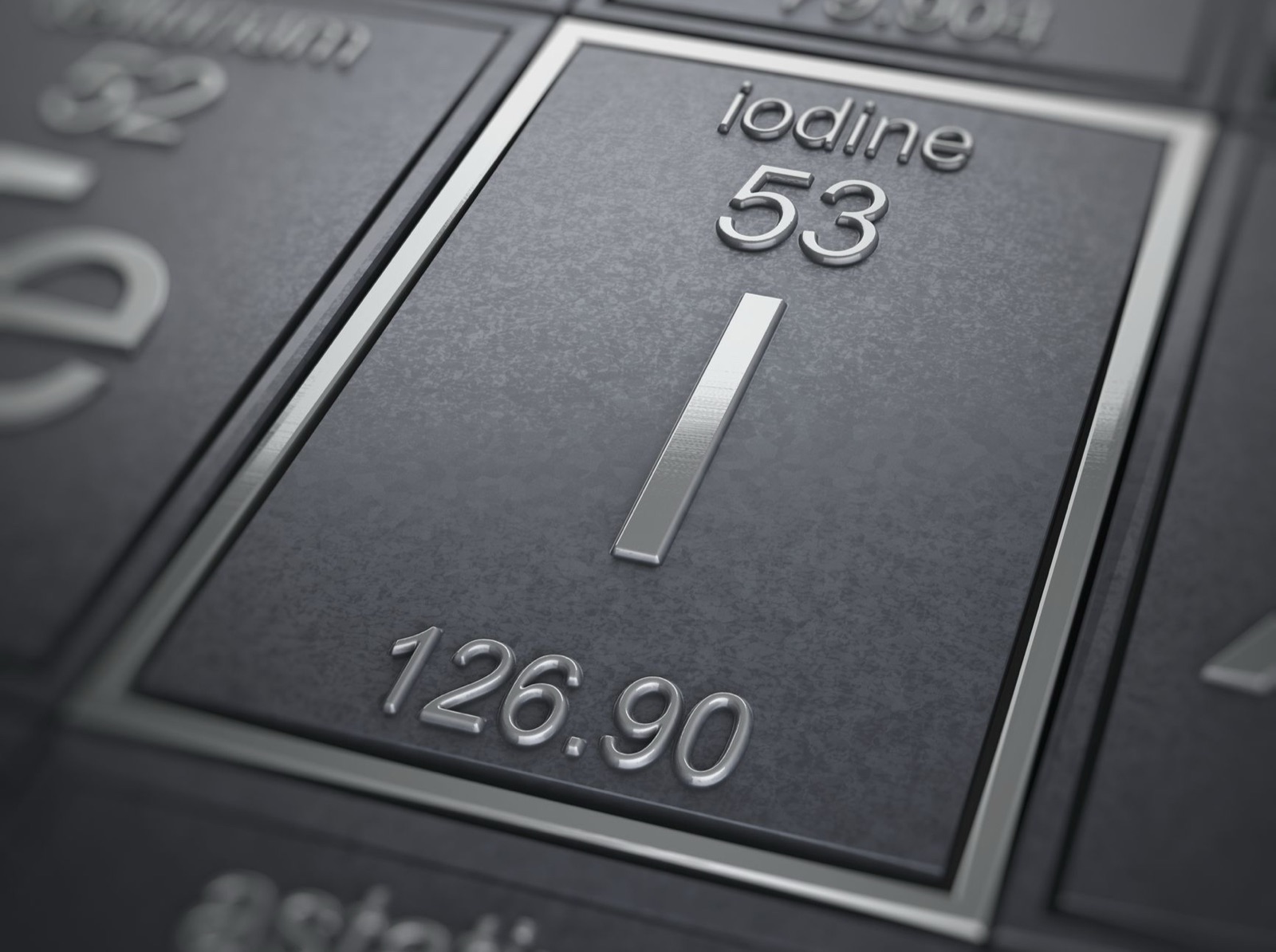
Is it important to supplement iodine in the aquarium?
Opinions differ on this subject, because there are tanks that "run" well both with and without supplementation.
Iodine in nature
In nature, in the oceans, iodine is present in various forms, both organic and inorganic. The inorganic forms are of most interest to fishkeepers: iodide, iodate and molecular iodine. Iodine is present in the oceans at a very low concentration, about 0.06 ppm; so we can count it among the trace elements. There it has various functions and certainly takes part, especially after being turned into an organic form, in some metabolic processes.
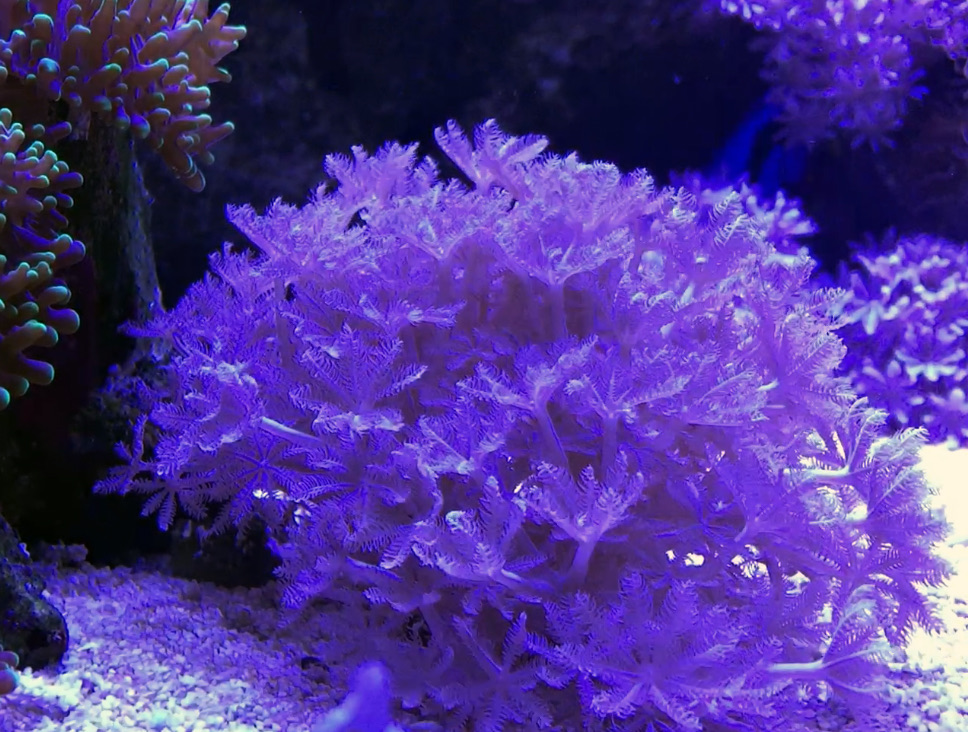
The big "consumers" of this element are above all macroalgae, but also gorgonians, sponges and soft corals (especially Xenia, see the photo at the bottom of the page).
Little iodine, in different forms, and who uses it
- 1Iodide inorganic form
- 2Iodate inorganic form
- 3Molecular iodine inorganic form
- 4Macroalgae big consumers
- 5Gorgonians consumers too
- 6Sponges consumers too
- 7Soft corals especially Xenia
In the oceans iodine is a trace element: about 0.06 ppm.
Supplement it or not?
So, having established that iodine is certainly an essential element for the proper working of the marine habitat we try to reproduce in our tanks, let's try to understand whether topping it up with specific products is necessary or superfluous.
It certainly gets into the tank with the partial water changes we make, but also through the food we give fish and corals, especially algae-based foods. A study carried out by Ron Shimek found that feeding the tank's inhabitants supplies on average 27% of the natural percentage of iodine every day. It is removed, on the other hand, by activated carbon, the skimmer and light.
Where iodine comes from and where it ends up
- 1Partial water changes bring iodine into the tank
- 2Food especially algae-based foods
- 3Activated carbon removes iodine
- 4Skimmer removes iodine
- 5Light removes iodine
According to the study cited by the author, food supplies on average 27% of the natural percentage of iodine every day.
That said, another aspect must also be considered before deciding whether to supplement: the test kits on the market for this element are rather imprecise, so it is easy to make wrong assessments. In the light of all these considerations, one could conclude that topping up is not strictly necessary in tanks that are not particularly "pushed", for example tanks not run with bacterial dosing.
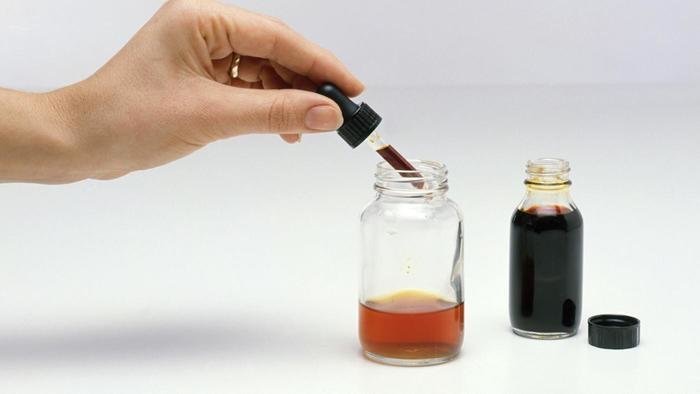
For anyone who does need to supplement it, there are countless iodine supplements on the market. Their compositions vary widely: some contain iodides, others iodates and others again solutions of iodide and molecular iodine (Lugol's solutions). All are suitable for topping up.
Iodine as a treatment
It is another matter if you decide to use iodine as a treatment.
Iodine has considerable antiseptic power and in marine fishkeeping it is used in particular for Oodinium ocellatum infections. For this use, not all the preparations on the market are suitable. In fact only molecular iodine has antiseptic activity: so you must use only Lugol's solutions (the only ones that contain it). Preparations can be bought at the chemist's but, since they cost about the same as the preparations specifically made by aquarium companies, the latter are preferable. At the chemist's there are both a strong solution (5%) and a normal one (3%), and to avoid dosing errors it is better to use products made for use in the tank and easy to manage.
Three product families, only one fit for treatment
- 1Iodides suitable for topping up
- 2Iodates suitable for topping up
- 3Lugol's solution iodides and molecular iodine
- 4Oodinium infection molecular iodine needed here
Only molecular iodine has antiseptic activity: treatment needs Lugol's solutions.
What to do, case by case
Tank not pushed hard
- Iodine arrives with water changes and food
- Topping up is not strictly necessary
You want to supplement
- Iodides, iodates or Lugol's
- All suitable for topping up
For treatment
- Only Lugol's solutions
- Better products made for aquariums: they avoid dosing errors
author: Giuseppe Ossolengo
Sources
- Luther G.W. III (2023). Review on the physical chemistry of iodine transformations in the oceans. Frontiers in Marine Science 10.
- Küpper F.C. et al. (2008). Iodide accumulation provides kelp with an inorganic antioxidant impacting atmospheric chemistry. PNAS 105(19): 6954-6958.
- McDonnell G., Russell A.D. (1999). Antiseptics and Disinfectants: Activity, Action, and Resistance. Clinical Microbiology Reviews 12(1): 147-179.
- WoRMS Editorial Board (2026). Amyloodinium ocellatum. World Register of Marine Species.
- Smith S.A., Schwarz M.H. (2019). Getting Acquainted with Amyloodinium ocellatum. Virginia Cooperative Extension, Virginia Tech.
- NIOSH (2019). NIOSH Pocket Guide to Chemical Hazards: Iodine. Centers for Disease Control and Prevention.
On the same topic
Chemistry and biomineralisation
KH, calcium and magnesium are not just numbers to keep stable: they are the bricks, the cement and the additive on…
Trace elements and metals
Elements we weigh in micrograms per litre but that govern entire biochemical reactions. Chapter 4: what they are for,…
Using clay mineral compounds in the marine aquarium
What clay mineral compounds are, the difference between physical and chemical adsorption, how the product is prepared…
Comments (5, in Italian)
Letto TT l'articolo, abbastanza semplice, leggibile e molto importante x la conoscenza delle nostre vasche, grazie
Pensavo che lo iodio fosse solo un integratore x lps e nn anche che sia un antisettico x parassiti
Abbastanza facile e leggibile
Molto chiaro complimenti, io uso sempre ioduro di potassio diluito al 5% e non ho mai avuto problemi di Oodinium ocellato.
Adoro questo articolo, leggo il vostro blog ogni giorno e lo condividerò con i miei follower su Facebook e con la mia lista
di e-mail. Vi prego di continuare a pubblicare, grazie.
Ciao,
iscriviti sul nostro canale facebook.
Grazie