
Dinoflagellates: Causes and Remedies
They feed in several ways, shut themselves into cysts and do not always give in to the same remedy
Today we talk about another charming aquarium guest: dinoflagellates. Without going into the complicated taxonomy of these organisms, and sticking to what is of purely aquarium interest, let's begin by saying that the species most often found have different needs and feeding habits. In general, dinoflagellates are autotrophic or heterotrophic, or both.
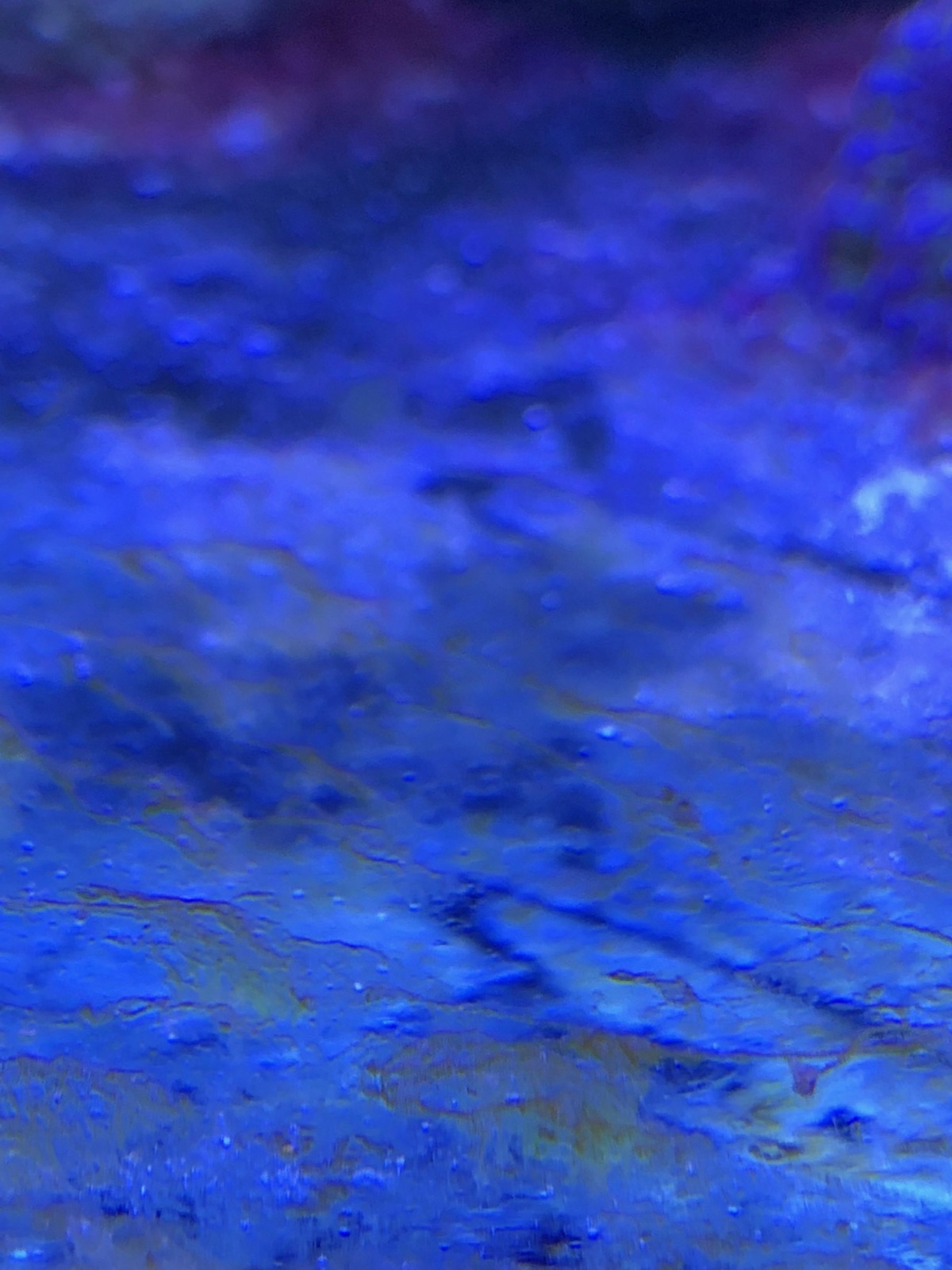
Their ability to use different feeding strategies, together with their ability to survive as cysts when they seem to have been wiped out, makes them very close to immortal in the reefkeeper's eyes, so much so that they are one of the main reasons for tearing down and restarting a tank, even for experienced reefkeepers.
To make things harder, online you find very different experiences about which methods work against them. Very often, what seems to work in one aquarium does not work in another. And that is indeed the case, which is clear if we consider what was said above.
Light, prey and cysts
Dinoflagellates (to which our beloved zooxanthellae also belong) are photosynthetic organisms, so they suffer a lot from lack of light, but the blackout technique cannot be kept up for more than three days in an aquarium stocked with SPS. They also behave as heterotrophs, even as predators: they can catch the particles suspended in the water column and feed on them. Forms of commensalism or other kinds of mutualism have been suggested to explain why cyanobacteria and dinoflagellates often occur together.
Three ways of staying in the tank
- 1Light they photosynthesise, like zooxanthellae
- 2Particles they catch them in the water column and eat them
- 3Cysts this is how they survive when they seem gone
- 4Tank covered the result, when they take over
Removing one resource is not enough: that is why what works in one aquarium may not work in another.
What favours them
What we can certainly say is that, as with cyanobacteria, with dinoflagellates too we must ask ourselves carefully what conditions we have inadvertently created that tip the aquarium's balance in favour of these unwanted guests. As with cyanobacteria, let's remember that the simplest organisms take advantage of extreme situations, those that knock the aquarium system off course towards non-ideal parameters, whether at the lower or the upper limit of a given range of values.
This is why we are baffled when we suffer an infestation of dinos or cyano in oligotrophic conditions. We wonder how, with inorganic nutrients at zero, the aquarium can be completely covered by this plague. But the key lies entirely in the concept expressed above: when a coral stops growing because of too much or too little of a given substance, the competing organisms take over.
The limit is on both sides
- 1Balance values stay within their range
- 2Lower limit for example nutrients at zero
- 3Upper limit for example too many heavy metals
- 4The coral grows and holds its space
- 5The dinoflagellates take over if the coral stalls
It is not only about how much is in the tank: the simplest organisms exploit the extremes, low as well as high.
Commercial products: with caution
Commercial products (Dinoxal, Dino X and others) do not seem effective against all species of dinoflagellates, so it would be wise to identify them with a light microscope before using invasive tools such as commercial medicines.
Let's remember that prolonged use of medicines, especially combined with changes to the photoperiod, can weaken corals so much that they become less resilient and may even die; so the best success stories on this subject use a combined therapy, that is several strategies used together to attack the enemy from several sides, so as to give yourself better chances.
Let's see how:
1) ICP test
Check in particular whether there is an excess of heavy metals in the tank: it could come from the trace elements added to the Balling, from an overloaded salt, or from poor-quality RO water. Identifying the cause is the first step to recovering the situation. The other thing to check is nutrients: in particular, watch out for two situations, namely nutrients at zero or an unbalanced Redfield ratio.
Remedies: use Triton Detox, Metasorb or Cuprisorb in the case of heavy metals, plus removing their cause.
Where heavy metals can come from
- 1Trace elements those added to the Balling
- 2Overloaded salt
- 3Poor-quality RO water
- 4ICP test checks for excess metals
- 5Detox, Metasorb, Cuprisorb plus removing the cause
Identifying the cause is the first step to recovering the situation.

In the case of unbalanced nutrients: the "dirty tank" technique, that is feeding the tank in a balanced way (never phosphates at zero, and always nitrogen slightly ahead, with a Redfield ratio from 16 up to 40-50). Dose phytoplankton, if possible different strains, dose copepods (some feed on dinoflagellates), use an algae filter.
2) Darkness for three days
It does not solve the problem, but the dinoflagellates will certainly not thank you. Afterwards, continue with a reduced photoperiod (4 hours of blue lights, then 6 hours of which 4 blue), increasing the lighting again by adding half an hour a day. Watch the Balling: consumption will drop and you risk finding KH at 10.
Darkness, then light a little at a time
- 1Darkness for three days does not solve it on its own
- 24 hours of blue light
- 36 hours, of which 4 blue
- 4Half an hour more a day until back to normal lighting
With less light consumption drops: if you do not cut back the Balling, KH can reach 10.
3) Vacuum, siphon
Using a filter sock. Even better: invest in a roller filter system, and you will manage to remove the whole pool of dinoflagellates floating in the water column.
4) Do not do water changes
Trace elements, especially heavy metals, are dinoflagellates' friends.
5) Raise the pH
For example by filtering the air going into the skimmer through soda lime (ATI CarboEx or any similar product, or look for the containers in shops that sell to dive centres or anaesthesia products, since the product is always the same). pH rises because CO2 is adsorbed; some dinoflagellates cannot extract carbon efficiently from carbonates, others use CO2 or carbonates equally well: it depends on your luck.
6) Increase biodiversity
Do everything needed to make copepods thrive, put a kilo of fresh live rock in the tank, reduce the skimmer's workload. A "sterile" tank is a paradise for dinoflagellates.
7) Ozone and UV
They have proved effective. Remember that ozone must always be used with an ORP meter, to avoid harming the aquarium and poisoning people.
8) Use H2O2
Same as above: it can help; watch the doses and watch the shrimps, which are very sensitive to peroxide.
9) Use activated carbon
The toxins produced by dinoflagellates irritate SPS and force them to retract their polyps.


Attack the enemy from several sides
- 1ICP test metals and nutrients
- 2Dark, then reduced light three days, then increase
- 3Sock or roller filter removes the floating ones
- 4No water changes trace elements help them
- 5Higher pH soda lime on the skimmer's air
- 6Biodiversity fresh live rock and copepods
- 7Ozone and UV ozone always with an ORP meter
- 8H2O2 watch doses and shrimps
- 9Activated carbon against the toxins
The numbers are those in the list. One measure alone may not be enough: together they give you better chances.

Article written by: Marco Mura
Sources
- Durán-Riveroll L.M., Cembella A.D., Okolodkov Y.B. (2019). A Review on the Biodiversity and Biogeography of Toxigenic Benthic Marine Dinoflagellates of the Coasts of Latin America. Frontiers in Marine Science 6: 148.
- Accoroni S., Totti C. (2016). The toxic benthic dinoflagellates of the genus Ostreopsis in temperate areas: a review. Advances in Oceanography and Limnology 7(1).
- Rost B., Richter K.-U., Riebesell U., Hansen P.J. (2006). Inorganic carbon acquisition in red-tide dinoflagellates. Plant, Cell and Environment 29(5): 810-822.
- Geider R.J., La Roche J. (2002). Redfield revisited: variability of C:N:P in marine microalgae and its biochemical basis. European Journal of Phycology 37: 1-17.
- NIOSH (2019). Pocket Guide to Chemical Hazards: Ozone. Centers for Disease Control and Prevention.
- NIOSH (2019). Pocket Guide to Chemical Hazards: Hydrogen peroxide. Centers for Disease Control and Prevention.
- NIOSH (2019). Pocket Guide to Chemical Hazards: Calcium hydroxide. Centers for Disease Control and Prevention.
- Rogalewicz B., Czylkowska A., Anielak P., Samulkiewicz P. (2020). Investigation and Possibilities of Reuse of Carbon Dioxide Absorbent Used in Anesthesiology. Materials 13(21): 5052.
On the same topic
Treatment against Valonia
A spot method against Valonia and other algal infestations: hydrogen peroxide and Coral Snow applied with a pipette.…
Unwanted pest animals
Aiptasia and majano are small anemones that get into the tank on rocks and frag plugs and multiply fast. How to…
Nuisance algae in the aquarium
What algae are, which animals graze them, why they grow too much in the tank, the role of water changes, salt and…