At a glance
Data from the scientific sources listed at the bottom.
Depth in the wild
8–30 m
Conservation
IUCN Red List: least concern (2023). CITES: Appendix II. The CITES listing covers all Scleractinia since 18 January 1990, excluding fossils; in the European Union it is in Annex B. 2 Red List assessment taken from SeaLifeBase. 3 In 2019-2020 this and five other species made up more than 35% of the catch of the Queensland coral fishery: 14.2 tonnes, equal to 317,718 pieces. 6
The coral
Group: LPS
Growth form: colonial; it can be attached to a hard substrate or live as loose fragments on the sediment 5 6
Zooxanthellae: yes
Growth: In fragments that started with one polyp, Artemia increased growth and the number of polyps. 8
Where it lives
WoRMS gives it in Australian waters and the central Indo-Pacific. 1 Species+ lists Australia, Indonesia, Papua New Guinea and Vietnam. 2 A 2022 study recorded it on the Bird's Head Peninsula, in West Papua, as the northern limit of the species. 5 The pieces collected for the study on the Australian fishery came from Queensland and Western Australia. 6
How to recognise it
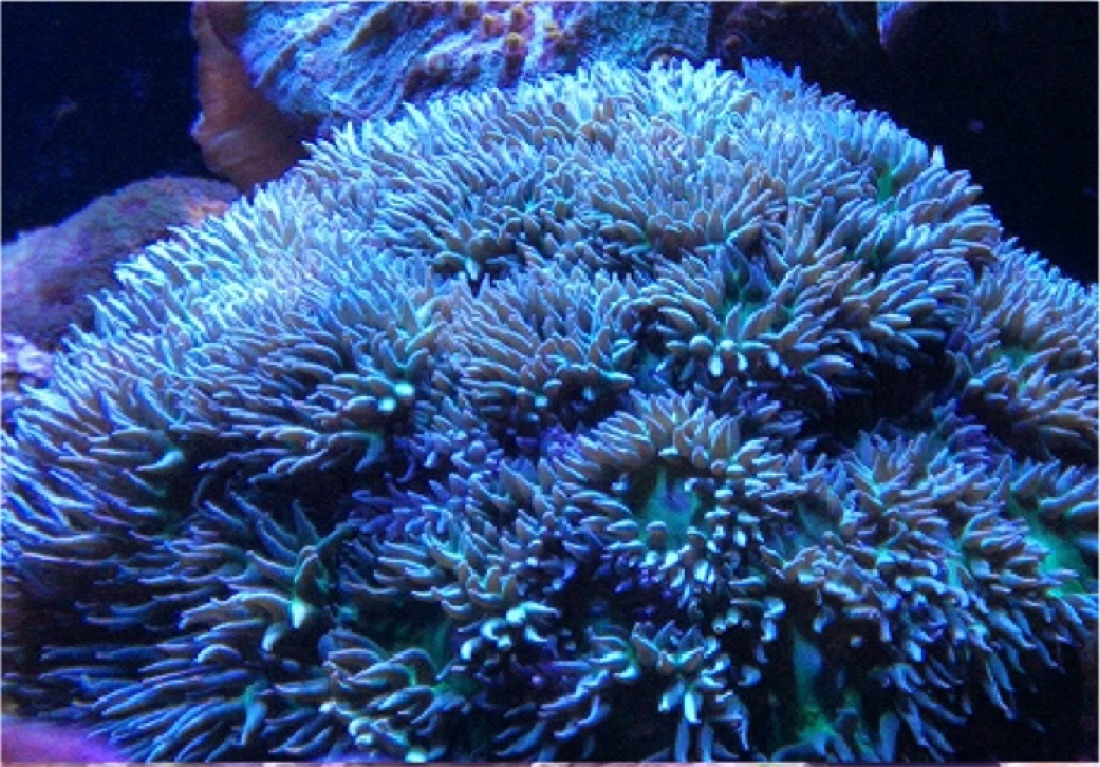
Tap a number on the photo: the key explains what to look for.
Life in the wild
Behaviour
It is a species that extends its tentacles by day; artificial light at night of 1.2 micromoles or more disrupts its rhythm. 9 In West Papua one specimen was damaged by contact with a neighbouring Goniopora coral; specimens lying free on the sand may escape competition for space more easily. 5
In the aquarium
From the experience of the BallingMania community.
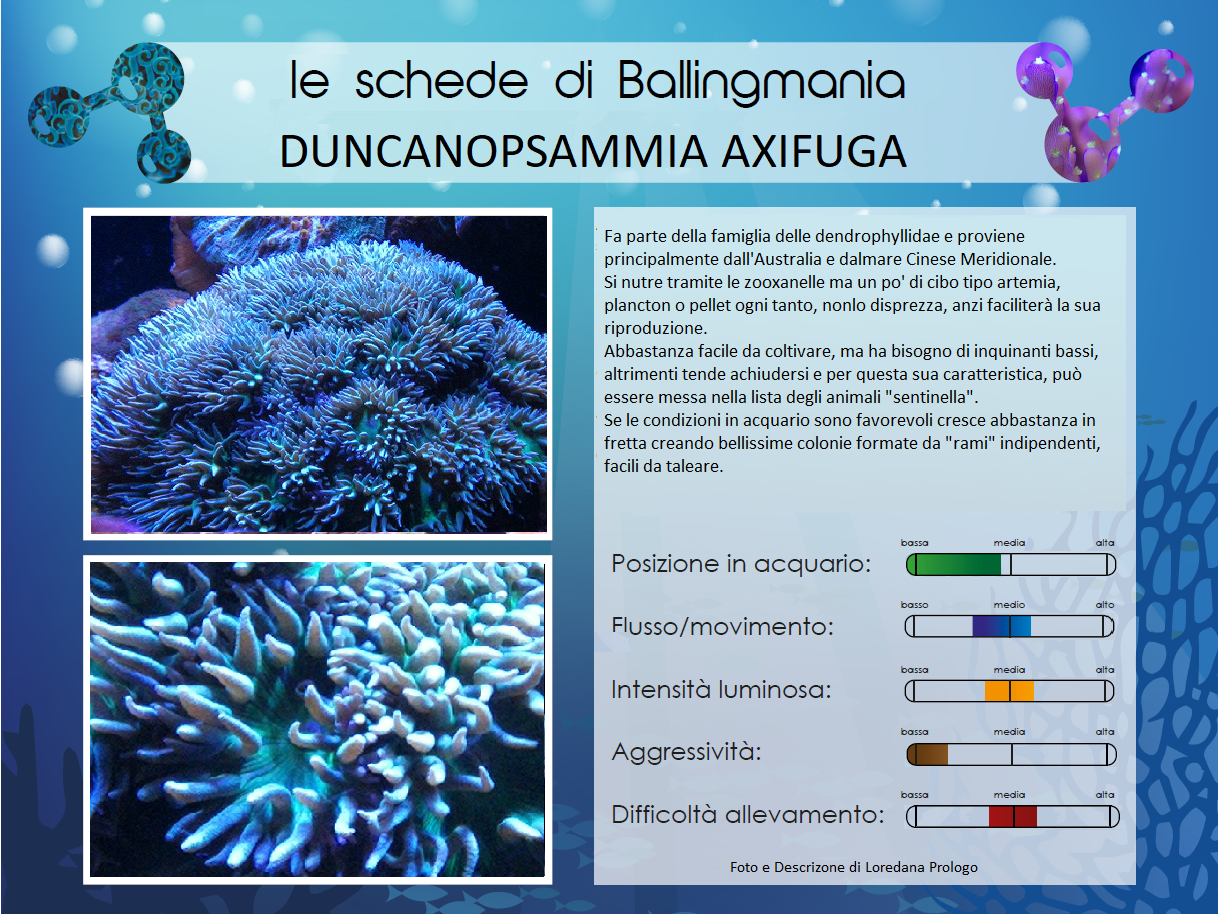
It belongs to the family Dendrophylliidae and comes mainly from Australia and the South China Sea. It feeds through its zooxanthellae, but it does not turn down a little food such as Artemia, plankton or pellets now and then; on the contrary, this will help it reproduce.
Fairly easy to grow, but it needs low pollutants, otherwise it tends to close up, and because of this trait it can be put on the list of "sentinel" animals.
If conditions in the aquarium are favourable it grows fairly quickly, creating beautiful colonies made up of independent "branches" that are easy to frag.
Photo and description by Loredana Prologo
What studies say about keeping it
Results of aquaculture studies, not instructions for the tank. In one experiment 85% of the fragments survived, and those attached without polyps produced the largest number of new polyps, regardless of food. 8 The polyps increased their consumption of Artemia up to 120 individuals per millilitre; above that concentration it did not change. 7
Did you know?
Sources
- Hoeksema B.W., Cairns S., Samimi-Namin K. (2026). Duncanopsammia axifuga (Milne Edwards & Haime, 1848). World Register of Marine Species.
- UNEP-WCMC (2026). Duncanopsammia axifuga, distribution and CITES listing. Species+.
- SeaLifeBase (2026). Duncanopsammia axifuga, stato IUCN. SeaLifeBase.
- Coral Trait Database (2026). Duncanopsammia axifuga in the Coral Trait Database: depth from Carpenter et al. (2008), zooxanthellae from Cairns (1999). Coral Trait Database.
- Subhan B. et al. (2022). A New Northernmost Distribution Record of the Reef Coral Duncanopsammia axifuga at Bird's Head Peninsula, West Papua, Indonesia. Diversity.
- Pacey K.I., Caballes C.F., Pratchett M.S. (2023). Using size-weight relationships to estimate biomass of heavily targeted aquarium corals by Australia's coral harvest fisheries. Scientific Reports.
- Tagliafico A., Rangel S., Kelaher B., Christidis L. (2018). Optimizing heterotrophic feeding rates of three commercially important scleractinian corals. Aquaculture.
- Tagliafico A., Rangel S., Kelaher B., Scheffers S., Christidis L. (2018). A new technique to increase polyp production in stony coral aquaculture using waste fragments without polyps. Aquaculture.
- Mardones M.L. et al. (2023). Artificial light at night (ALAN) disrupts behavioural patterns of reef corals. Marine Pollution Bulletin.
- Baird A.H. et al. (2021). An Indo-Pacific coral spawning database. Scientific Data.
Sources checked on 5 November 2026. Community texts and ratings are kept separate from the scientific data.