
Introduction to live phytoplankton
What it is, what it does in the tank and how to culture it at home, from the bottle to the big tub
Phytoplankton means the set of plant-like planktonic organisms in the sea, that is, clusters of single-celled algae whose size ranges from 2 to 4 microns depending on the species.
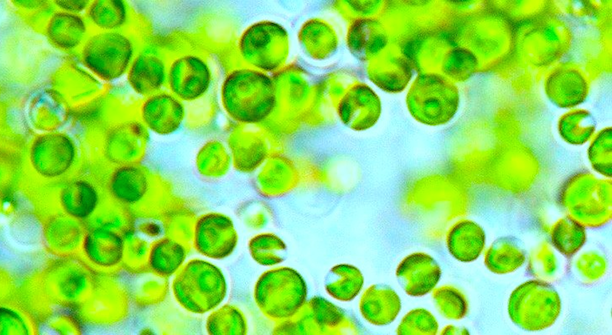
There are thousands of types of phytoplankton in nature, but for use in the aquarium a few strains have been selected whose nutritional profile is complete in itself; among the most common are Nannochloropsis, Chlorella, Dunaliella, Tetraselmis, Isochrysis and Spirulina.
Given their small size, Nannochloropsis and Chlorella are particularly suitable for dosing in the marine aquarium: their size and composition make them excellent food for corals (soft, LPS and SPS) and filter-feeders, as well as for the whole aquarium system (benthos, zooplankton and so on).
Various types and brands of phytoplankton (some quite well known) are on sale, but this is dead phytoplankton, which not only lacks the qualities of live phytoplankton but also pollutes, so very low doses are prescribed... useless, in my humble opinion. With live phytoplankton, on the other hand, things are different: being live food it does not pollute; on the contrary, it partly helps the system get rid of the nitrate and phosphate it feeds on.
So, to sum up, live phytoplankton is used for many purposes:
- it is excellent food for corals and filter-feeding organisms
- it is the main food of the benthic fauna, very important in our tanks, whose reproduction it boosts enormously
- it supplies vitamins, amino acids, essential fats, omega-3, proteins and nutrients that are indispensable in a closed system (aquarium) for the well-being of our animals
- its composition makes it excellent food for zooplankton
- given its small size of 3 to 6 microns, it is used to rear larvae of marine shrimps and fish, as well as Artemia, rotifers, copepods and so on
- it boosts the growth of corals (SPS, LPS, soft corals and filter-feeders, giant clams)
- steady dosing makes it possible to keep invertebrates that would otherwise be hard to keep, such as azooxanthellate species and filter-feeders whose main food is phytoplankton
- it helps get rid of the nitrates and phosphates phytoplankton feeds on
- IT DOES NOT POLLUTE, BEING A LIVE FOOD
Who eats live phytoplankton in the tank
- 1Phytoplankton live single-celled algae
- 2Nitrates and phosphates phytoplankton feeds on them
- 3Corals soft, LPS and SPS
- 4Benthic fauna and zooplankton, spurred to breed
- 5Filter-feeders giant clams and azooxanthellates
Alive, phytoplankton is both food for many animals and a consumer of nitrates and phosphates.
Sources: [3]

Among the phytoplankton strains easy to find is Nannochloropsis oculata, which I have found very easy to culture; personally I have also had a lot of success culturing Chlorella and Dunaliella. (Other strains are Tetraselmis suecica, Isochrysis galbana, Spirulina, Nitzschia, Scenedesmus, Pyrocystis and many others, which I will not go into as I have no direct experience culturing them).
What do you need to culture phytoplankton?
- A good-quality starter, which you can buy from your trusted shop or online; anyone interested in more explanations, further information or anything else can also contact me without any problem (menetil91@libero.it , 3892933608).
- A transparent container in which we will culture the phytoplankton.
- A light source and an air pump without an airstone, to create movement.
What you need to culture phytoplankton
- 1Transparent container with a good-quality starter
- 2Lamp and reflector no shaded areas
- 3Sunlight the best, near a window
- 4Air pump sized to the litres, no airstone
- 5Vigorous movement perhaps the most important point
- 6Specific nutrient 1 ml per litre, never plant fertiliser
- 7Temperature not above 23/24 °C, not below 18
Light, movement, temperature and nutrients: for the author, movement is the one most often neglected.
Let's start looking at the individual points:
The container
To culture phytoplankton we need a transparent container, but what should we use?
Bottles, reactor or big tub
- 1Bottles and drums cheap, but more space for the same litres
- 2Reactor uses height: over 10 litres
- 3Circulation pump oxygenates and prevents detritus
- 4Big tub to light, or to keep outdoors
The alga does not change; what changes is the litres you need and the space you have. Indicative proportions.
The reactor
Many phytoplankton reactors are on sale, from many manufacturers; I have seen some really well made and finished ones that do their job excellently, the only drawback being a price not everyone can afford. For DIY enthusiasts there are many guides on the web on how to build your own phytoplankton reactor; in this case you will have a reactor with a less polished finish but just as functional and cheap. Personally I would recommend reactors only for production above 10 litres: by using height, reactors take up little space in proportion to their capacity; I myself, producing a fair amount of phytoplankton, use reactors to save space.

Bottles and drums
A decidedly cheap alternative to the reactor, and no less functional, is 2, 3 or 5-litre transparent bottles and drums. In this case costs are kept to a minimum, and you still get excellent results. The only disadvantage compared with the reactor, apart from looks and finish (for those who care), is that for the same capacity they take up much more space.

Big tubs for large-scale culture
For those who produce large quantities of phytoplankton (from 50 litres up), the ideal solution is large dedicated tubs, lit or kept outdoors, fitted with circulation pumps to oxygenate the water and prevent detritus from building up.

Phytoplankton growth, and the speed at which it multiplies, depend on several variables, mainly:
- light intensity
- vigorous movement
- temperature
- nutrients
- quality of the water and salts used (no table salt)
- cleanliness of the culture equipment (bottles, containers, tubs, reactors)
The culture conditions given by FAO
Author and manual agree on temperature: the range of 18 to 24 °C is the same.
Sources: [1]
Lighting
Let's start with the first point: lighting.
Light intensity affects photosynthesis, so clearly the more light, the shorter the maturation time of our phytoplankton culture; in this regard I recommend not exceeding 10 hours of light, since too much light intensity can also inhibit photosynthesis, which in our case would mean a long maturation and a difficult recovery of the phytoplankton, and as a result an almost certain crash of the culture.
So which light should we use?
From my experience culturing Nannochloropsis, Chlorella and Dunaliella I can say that you can get results even with low-consumption light sources, such as energy-saving bulbs, LEDs, fluorescent tubes... of course the light must reach all the phytoplankton without shaded areas; in this regard it would be a good idea to get a small reflector and use light in proportion to the amount of phytoplankton we want to culture (so, to give an absurd example, you cannot keep a 50-litre phytoplankton culture with a 13-watt bulb). Sunlight is even better, and here the difference is remarkable, so if possible I always recommend placing the phytoplankton where it gets direct sunlight (for example near a window).
Movement
Movement is perhaps the most important and influential point for correct and productive culturing. It is often exactly what many people wrongly neglect, with predictable consequences. As mentioned, the movement must be very vigorous: you can get it with an air pump (without an airstone), here too sized to the amount of phytoplankton being cultured, or by using circulation pumps (these are particularly suitable when phytoplankton is cultured in large quantities in tubs of 50 litres or more).

If you use bottles, plastic drums or any other container that allows it, I recommend shaking the container at least once a day, to make up for any lack of movement (you can never have too much) and to stop sediment building up.
Temperature
Within certain limits a rise in temperature boosts metabolic processes, so a higher temperature generally means more phytoplankton; however, beyond a certain range you easily risk the culture crashing, which is why I strongly recommend keeping phytoplankton at room temperature (not above 23/24 °C) and using heaters only if temperatures drop below 18 °C.
Nutrient availability
Another crucial element... the availability of nutrients (nitrogen, phosphorus, iron and trace elements). Naturally, to multiply, phytoplankton needs food; being cultured in a closed environment, we must step in ourselves by adding specific foods/fertilisers designed for phytoplankton growth (1 ml per litre). Absolutely do not use fertilisers not suited to the purpose (such as flower fertilisers and plant feeds), which could contain traces of copper and other elements that the phytoplankton would not metabolise and use up and that would end up being dosed into the tank.
Excellent results are also obtained by adding CO2; in this case you can limit or even do without fertiliser, but here too I recommend using CO2 only in sizeable culture systems.
Cleaning the equipment
Another important thing is to sterilise all the equipment thoroughly to avoid contamination, which could lead the culture to crash.
When preparing the water for the culture, it is best not to use tap water but much better to use water from a good RO unit, since the chlorine in tap water is absolutely toxic to phytoplankton and could therefore lead the culture to crash. Aquarium water could quickly contaminate the culture; you should use water prepared specially for the culture, with RO water and a good-quality salt.
Maturation
Another question many people often ask me concerns the times and ways in which phytoplankton matures; here too there are many variables that would affect everything, so it is not possible to set a standard duration. On average phytoplankton matures in 7 to 15 days; a sign that it has matured is the colour of the phytoplankton itself, which deepens to dark green and no longer lets light through.
The phases of a culture
- 1Start cells increase slowly
- 2Rapid growth the phase to maintain, says FAO
- 3Slowing down light or nutrients start running short
- 4Stationary phase growth and limits balance out
- 5Crash water worse, nutrients used up
For the author, dark green is reached in 7-15 days. The curve's shape is schematic: real times vary with every culture.
Sources: [1]
Here are some examples of mature phytoplankton (see the two photos below) of my own production, ready to be dosed.


Thanks to everyone for reading, have fun culturing phytoplankton ;)
author: Salvatore Riccardo
Sources
- Lavens P., Sorgeloos P. (eds.) (1996). Manual on the Production and Use of Live Food for Aquaculture, section 2.3: Algal production. FAO Fisheries Technical Paper 361.
- Lavens P., Sorgeloos P. (eds.) (1996). Manual on the Production and Use of Live Food for Aquaculture, section 2.4: Nutritional value of micro-algae. FAO Fisheries Technical Paper 361.
- NOAA (2026). What are phytoplankton?. National Ocean Service.
- Leal M.C., Ferrier-Pagès C., Calado R., Thompson M.E., Frischer M.E., Nejstgaard J.C. (2014). Coral feeding on microalgae assessed with molecular trophic markers. Molecular Ecology 23(15): 3870-3876.
- Ye Y., Liu M., Yu L., Sun H., Liu J. (2024). Nannochloropsis as an Emerging Algal Chassis for Light-Driven Synthesis of Lipids and High-Value Products. Marine Drugs 22(2): 54.
On the same topic
Snow in the tank: four clarifiers compared
ATI Easyvital, KZ Coral Snow, Modern Reef BIOReef-Snow and Resolve look alike, but they work in different ways:…
Bacterial growth: what really happens
"We dose bacteria to lower nitrates and phosphates" is only the end result, not the process. What really happens in…
The refugium: the biological lung of the reef
The skimmer removes organics before they become nitrate; the refugium absorbs what has already formed. How it works,…
Comments (6, in Italian)
buonasera. altri esperti in materia consigliano una irradiazione luminosa di 16 18 ore, lei consiglia 10 ore. perchè cosi tanta differenza. grazie.
Ciao, volevo chiederti se ci vuole acqua salata oppure semplice acqua osmosi ?
Ciao,
non so darti una risposta, non sono io che ha redatto l'articolo.
Per avere una risposta apri un post sul nostro canale facebook.
Grazie
Giuseppe Martini
Ciao,
Come acqua ci vuole acqua salata con salinità uguale o meglio ancora , lievemente inferiore a quella dell'acquario marino .
In questo modo il fito maturo quando verrà messo in vasca , quello che non viene "usato" potrà continuare a vivere tranquillamente.
Massimo
Ciao,volevo chiederti se come contenitore per la produzione va bene anche la tanica di plastica chè cè nella foto della tua produzioe,e volevo sapere anche sé come starter posso usare un litro di fitoplacton vivo per farne tre o quattro. Grazie
Ciao,
poiché non sono io l'autore dell'articolo, vai su facebook iscriviti sul nostro gruppo cosi da poter fare
tutte le domande che vuoi.
Grazie